
A beautiful dial can catch your eye from across the room, but any true watch enthusiast knows that the real magic often happens when you turn the piece around. Today, we need to talk about beautiful backsides—the often-underappreciated art of the watch caseback.
While the face of the watch gets all the public attention, the reverse side is an intimate secret kept between the timepiece and its owner. Whether it is a solid metal canvas featuring intricate, historical engravings or a breathtaking sapphire exhibition caseback revealing the mechanical heartbeat inside, a well-executed caseback can elevate a watch from a simple accessory to a masterpiece of micro-engineering.
The Rise of the Exhibition Caseback: Flirting with Mechanics
For decades, the solid caseback was the industry standard. It was functional, robust, and protected the movement from the elements. However, the renaissance of mechanical watchmaking brought a desire to showcase the craftsmanship hidden within.
Enter the open caseback (or display caseback). By replacing solid gold or steel with a scratch-resistant sapphire crystal, watchmakers allowed us to gaze directly into the soul of the watch.
When you look through a sapphire crystal caseback, you aren’t just looking at gears; you are admiring:
- Geneva Stripes (Côtes de Genève): The elegant wave-like pattern applied to bridges and rotors.
- Perlage: The delicate, circular graining hidden on the mainplate.
- Anglage (Chamfering): The meticulously polished bevels on the edges of components that catch the light with every movement.
Solid Artistry: Why Some Backsides Don’t Need to Be Transparent
An exhibition caseback is mesmerizing, but we cannot ignore the charm of a beautifully engraved solid back. Brands like Omega (with the iconic Speedmaster Seahorse) or Longines have proven that a solid piece of steel can become a canvas for storytelling.
A solid watch caseback offers a different kind of luxury: it keeps the mechanical secret safe while providing a textured, tactile experience against the wrist.
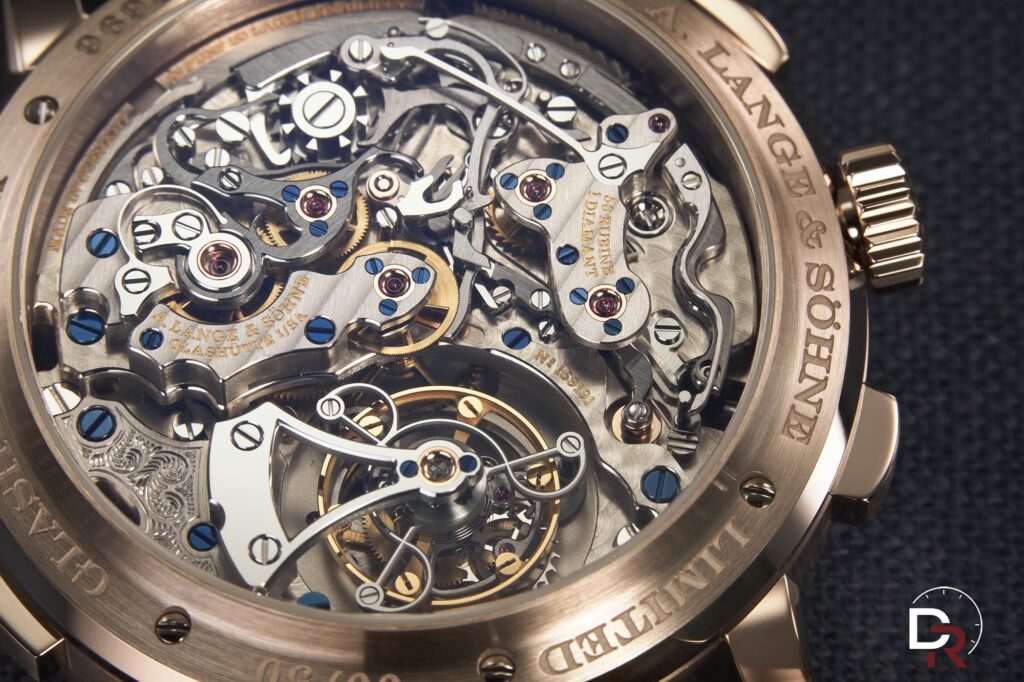
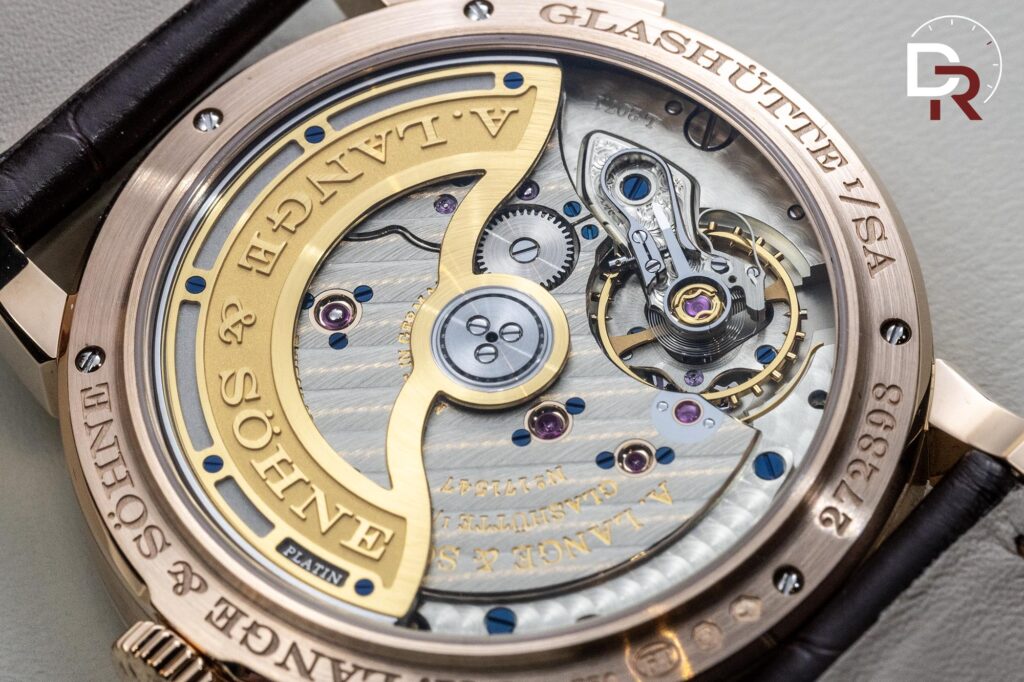
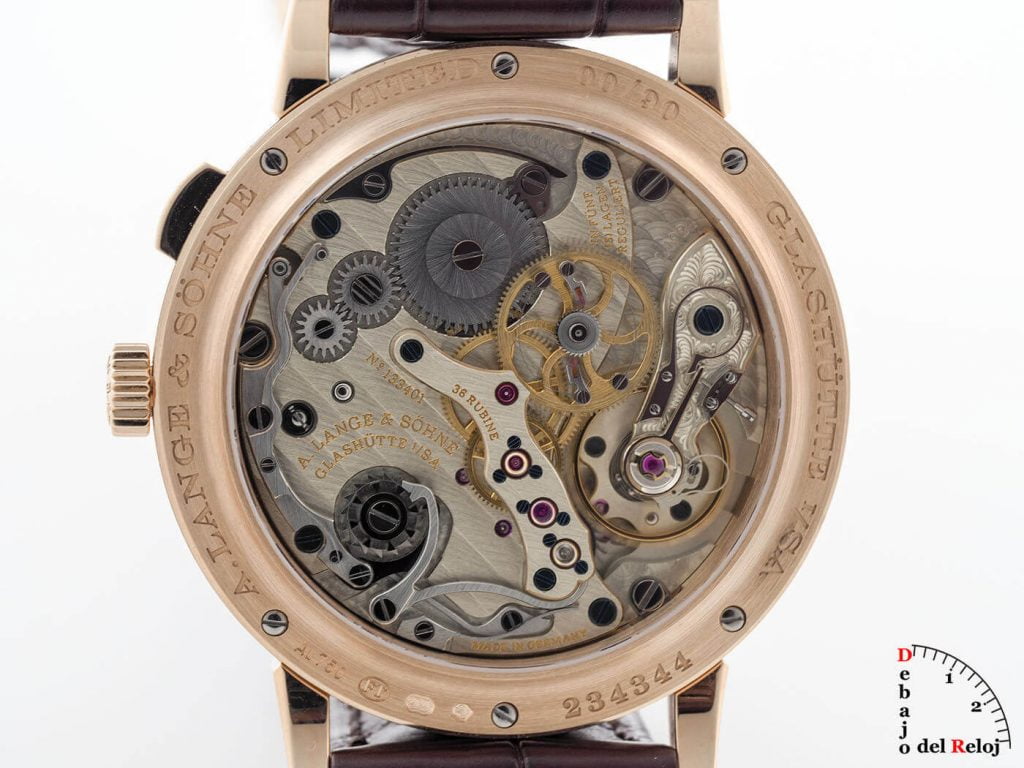
A. Lange & Söhne: The Obsession with Saxon Detail
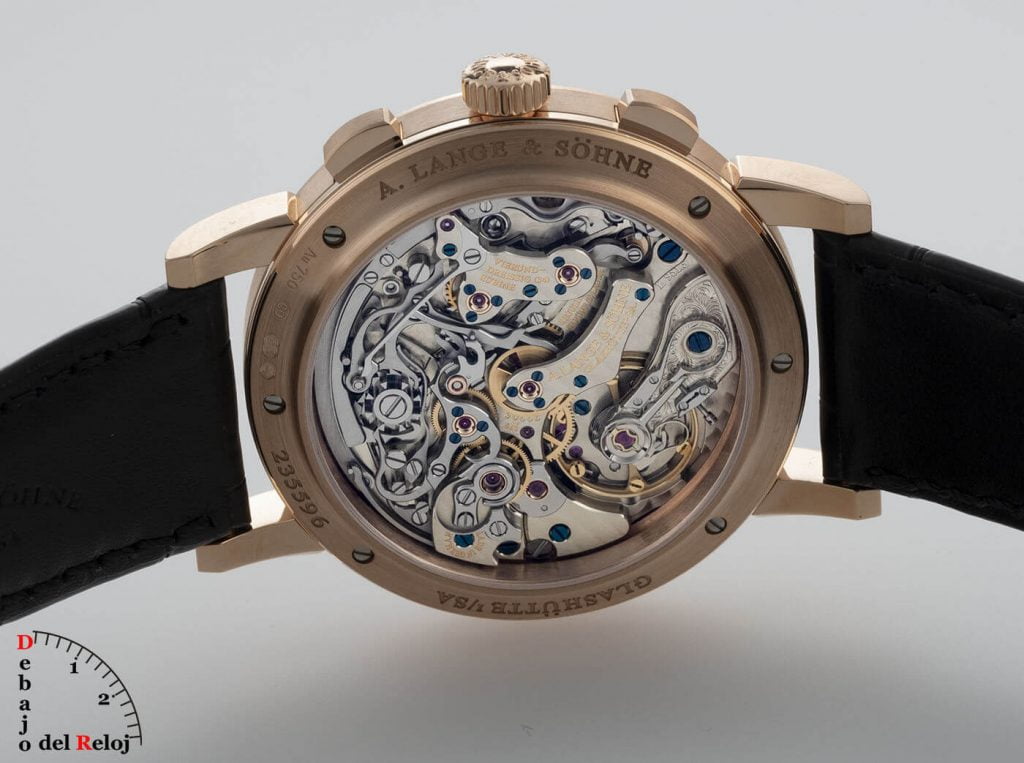
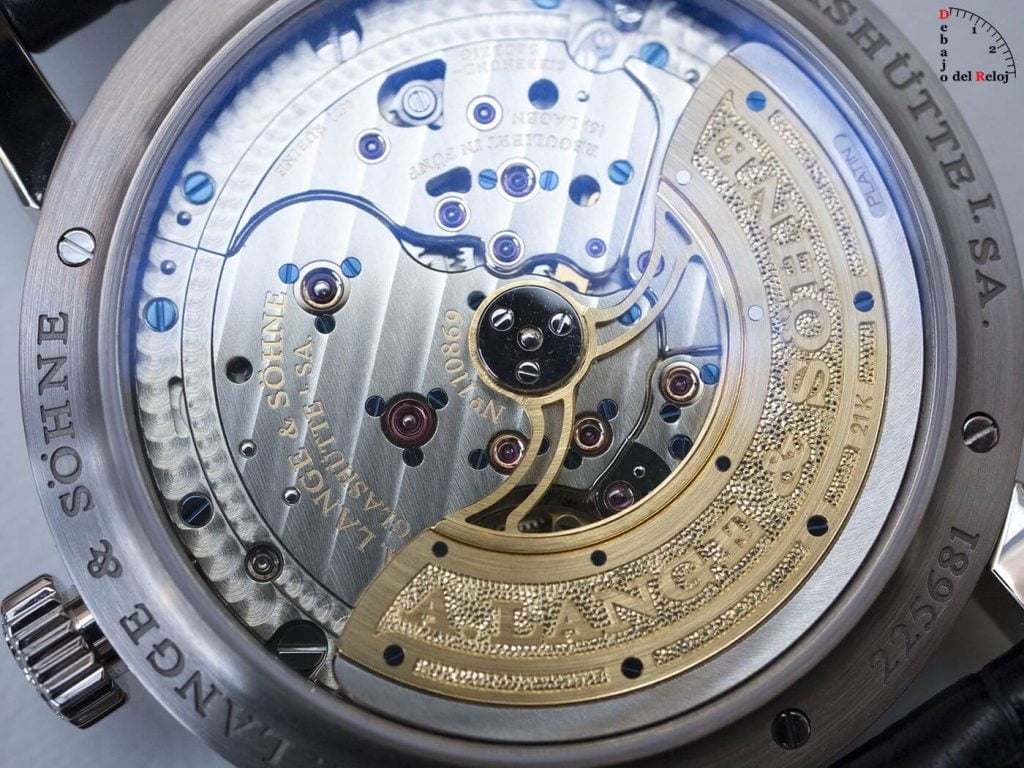
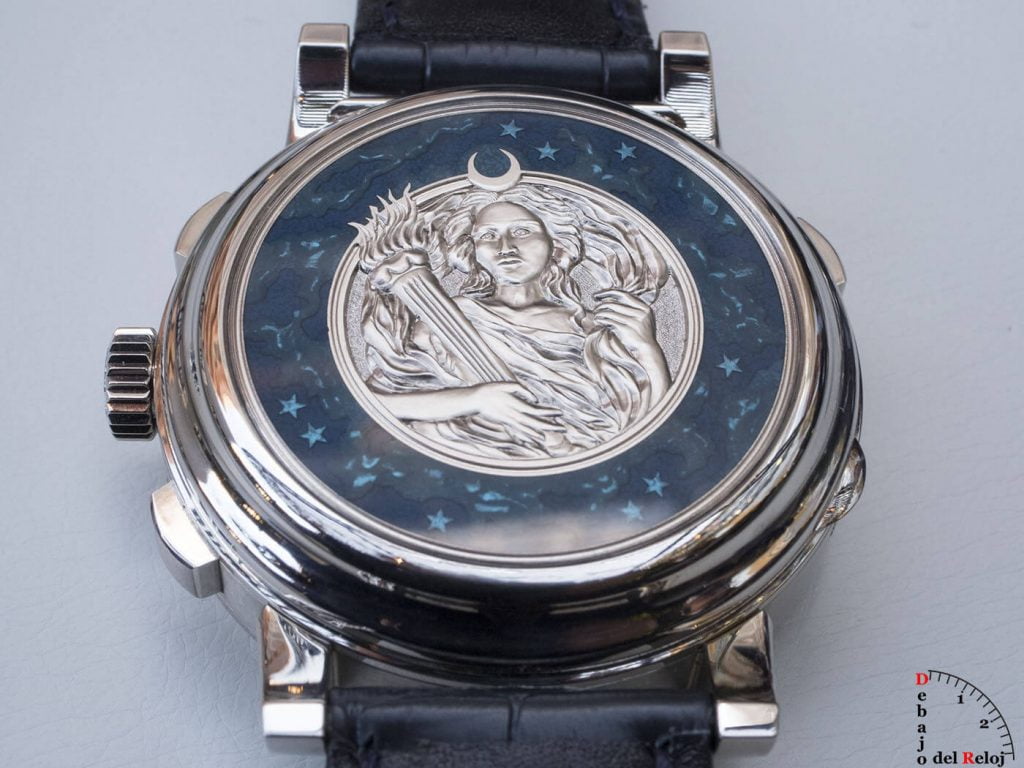
We begin our journey with a manufacture that represents pure temptation for any macro photography enthusiast: A. Lange & Söhne. We dive into both their manual and automatic exhibition casebacks, while also uncovering a hidden gem featuring a solid back.
- The Manual Labyrinth: In their manual-wind timepieces, we encounter two levels of mechanical complexity. We move from a purist calibre to highly complicated movements, where untreated German silver bridges and gold chatons secured by blued screws create a three-dimensional visual depth that is spectacular under the macro lens.
- The Magnetism of the Rotor: In their automatic models, the oscillating weight claims center stage. Occupying nearly the entire reverse side, Glashütte’s master artisans have bestowed upon it a superb display of engraving and decoration that acts as pure magnetism for the camera lens.
- The Solid Canvas: Finally, their solid caseback execution is a true blessing. It serves as a canvas for meticulous engraving and enameling work that we absolutely adore—a brilliant showcase of how a closed caseback can be just as sexy and artistic as an open one.
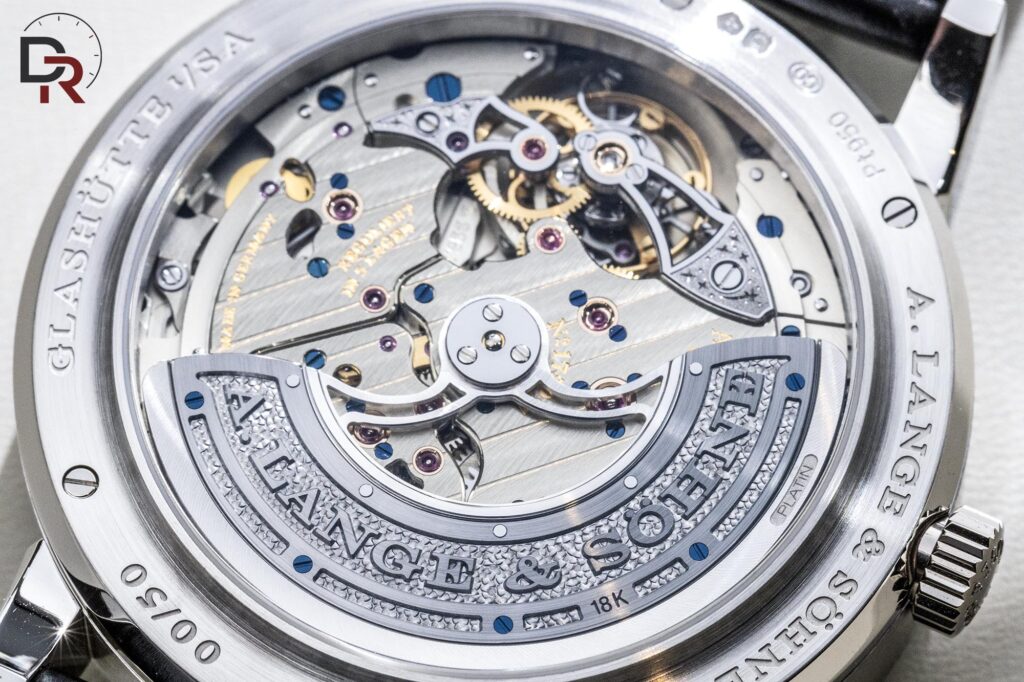
Patek Philippe: The Sacred Art of Micro-Engineering
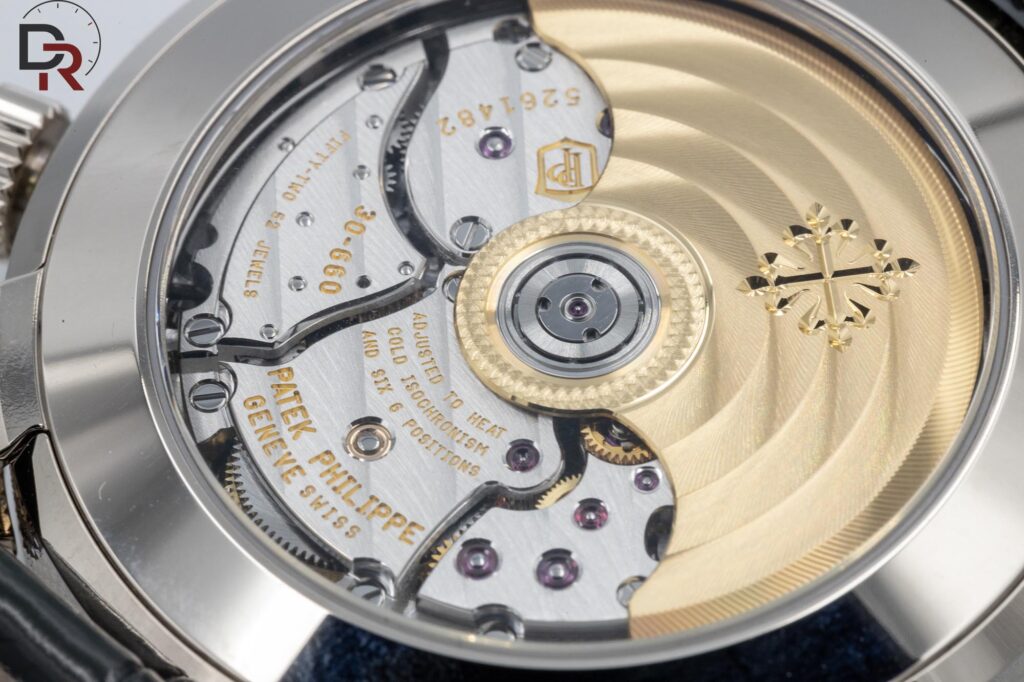
If we are going to talk about the most beautiful backsides in haute horlogerie, stopping by the maison that turns a caseback into a piece of sacred art is non-negotiable: Patek Philippe. Here, nothing is hidden; on the contrary, their exhibition backs are an obscene display of micro-engineering and hand-finishing that justify the desire they evoke.
- The Automatic Heartbeat of the Full Rotor: Through the sapphire crystal, we can appreciate the hypnotic symmetry of the Calibre 30-660. The absolute star of the show is its spectacular 21-karat gold rotor, beautifully adorned with the iconic Calatrava cross and a subtle guilloché pattern that catches the light from every single angle.
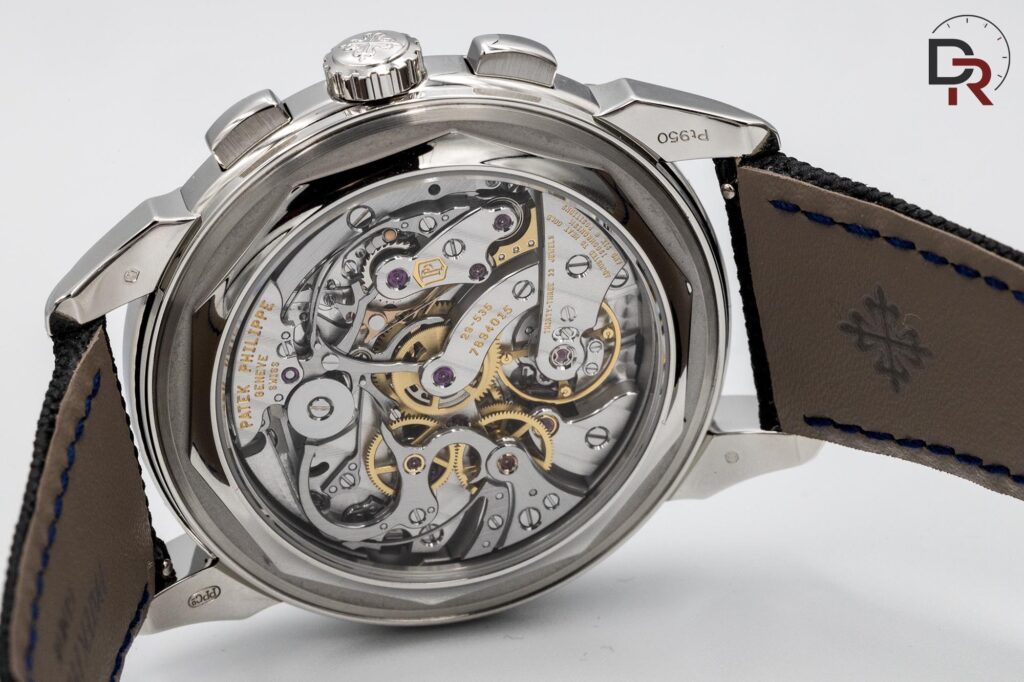
- The Complexity of the Manual Chronograph: On the other hand, their manual-wind chronograph movements—such as the magnificent Calibre 29-535 housed within platinum (Pt950) cases—reveal an intricate mechanical labyrinth. It is a festival of hand-chamfered bridges, column wheels, and lateral clutches where every component is polished to the extreme.
Jaeger-LeCoultre: The Watchmaker of Watchmakers
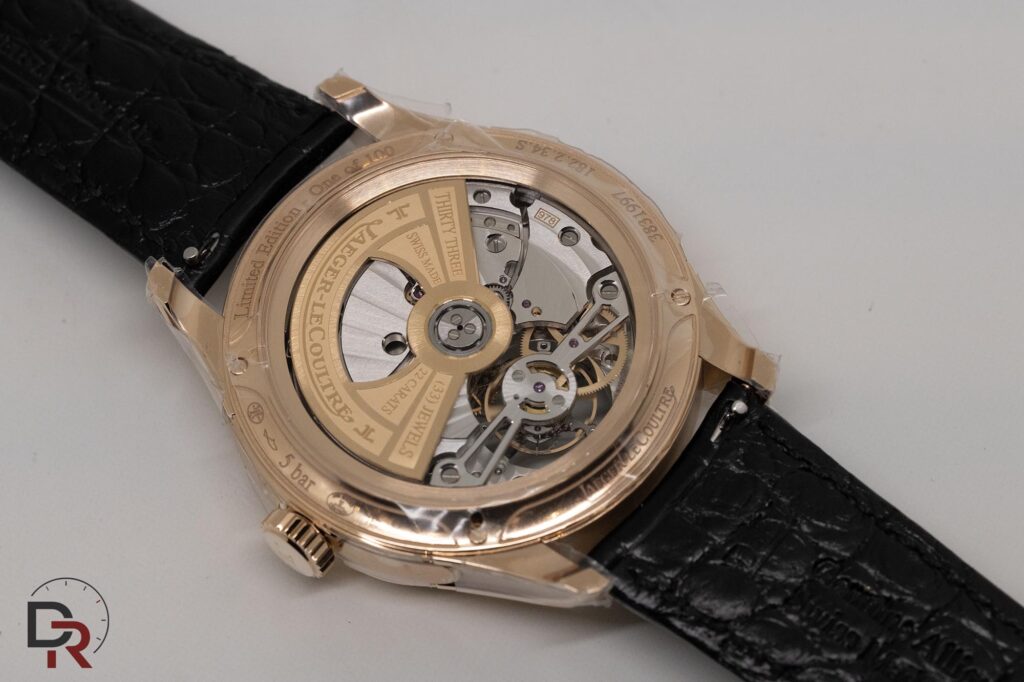
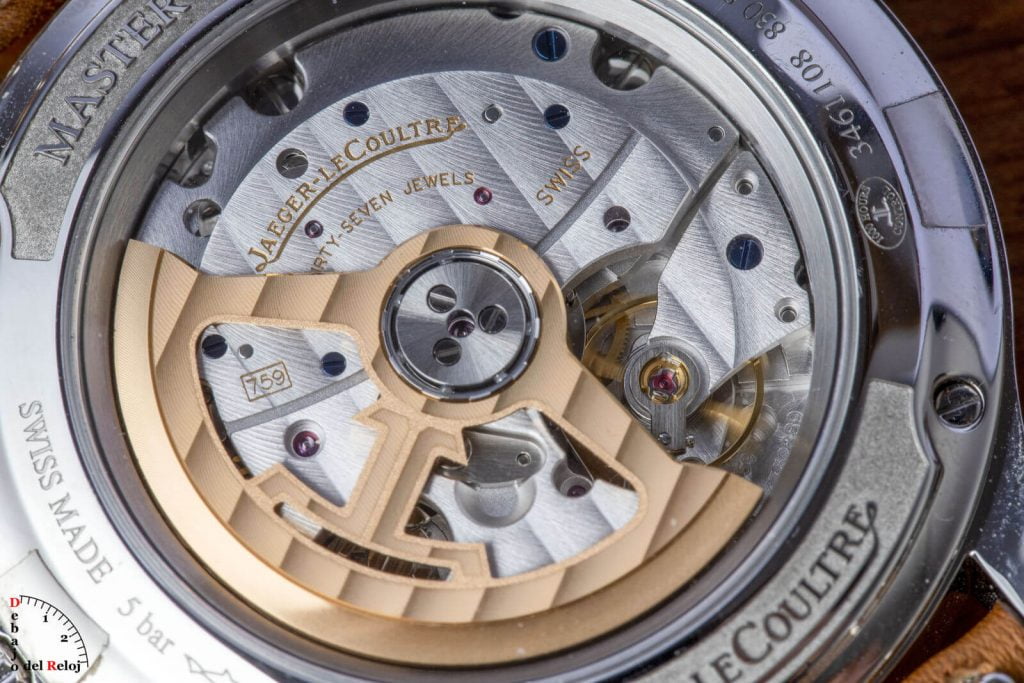
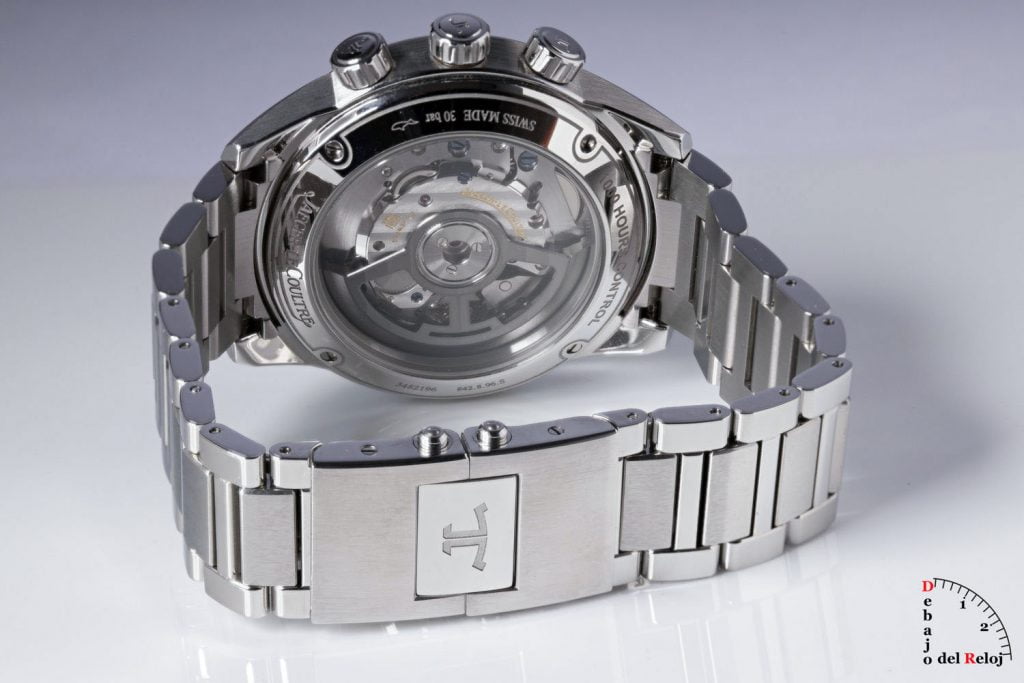
To speak of Jaeger-LeCoultre is to speak of a manufacture boasting one of the greatest technical legacies on the planet. While their dials exude classic elegance, turning them around means stepping into a temple of micro-engineering and high craftsmanship.
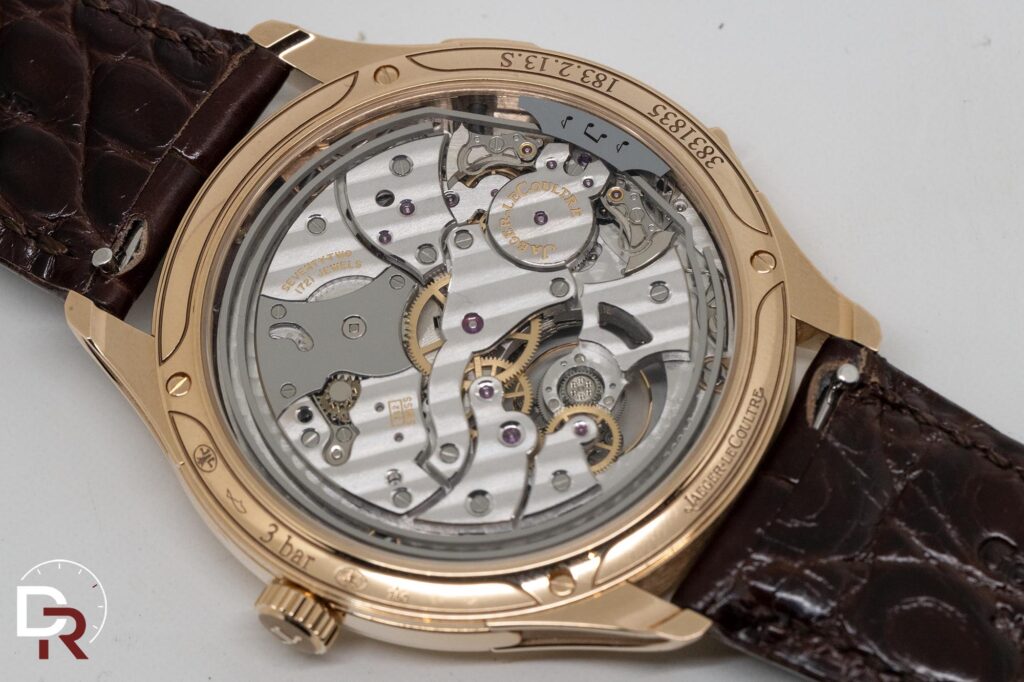
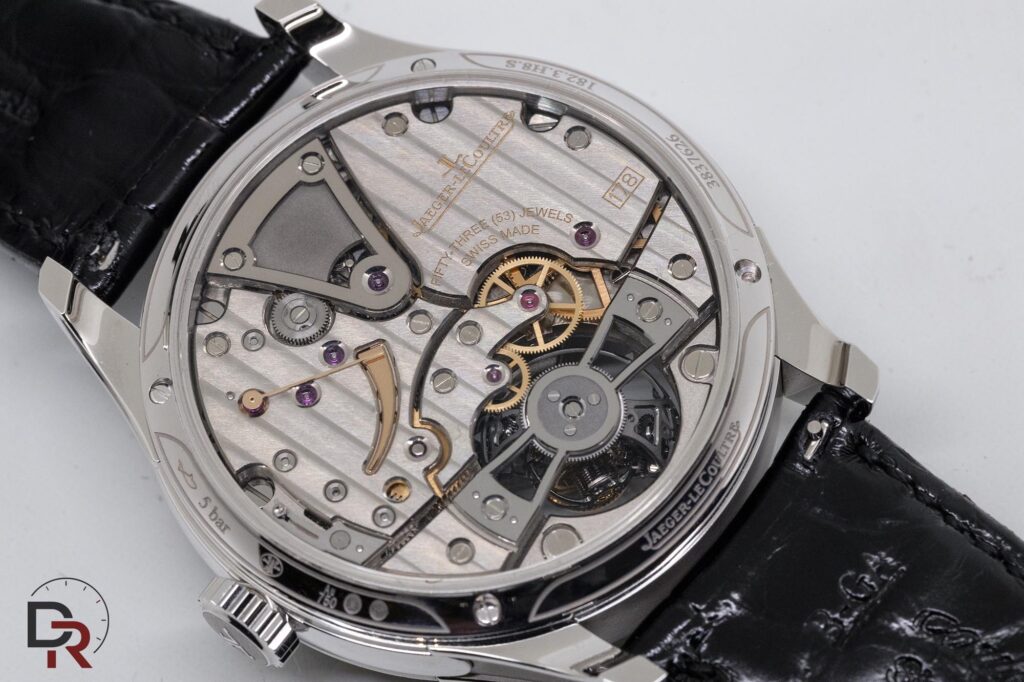
- The Obsession with Pure High Complications (Manual): In their manual-wind pieces, the manufacture completely dispenses with oscillating weights to offer a clean, imposing, and three-dimensional view of pure mechanics. These are breathtaking calibres that lay bare intricate chiming mechanisms, hand-beveled bridges, countersunk rubies, and mirror-polished transmission wheels.
- The Magnetism of Skeletonized Rotors (Automatic): In their high-end automatic calibres, the oscillating weight is never an obstacle to the view; it is a fundamental part of the show. Featuring gold rotors exquisitely skeletonized with the manufacture’s logo, the brand achieves the perfect balance: maintaining the convenience of automatic winding while allowing us to delight in the Côtes de Genève decorating the bridges below.
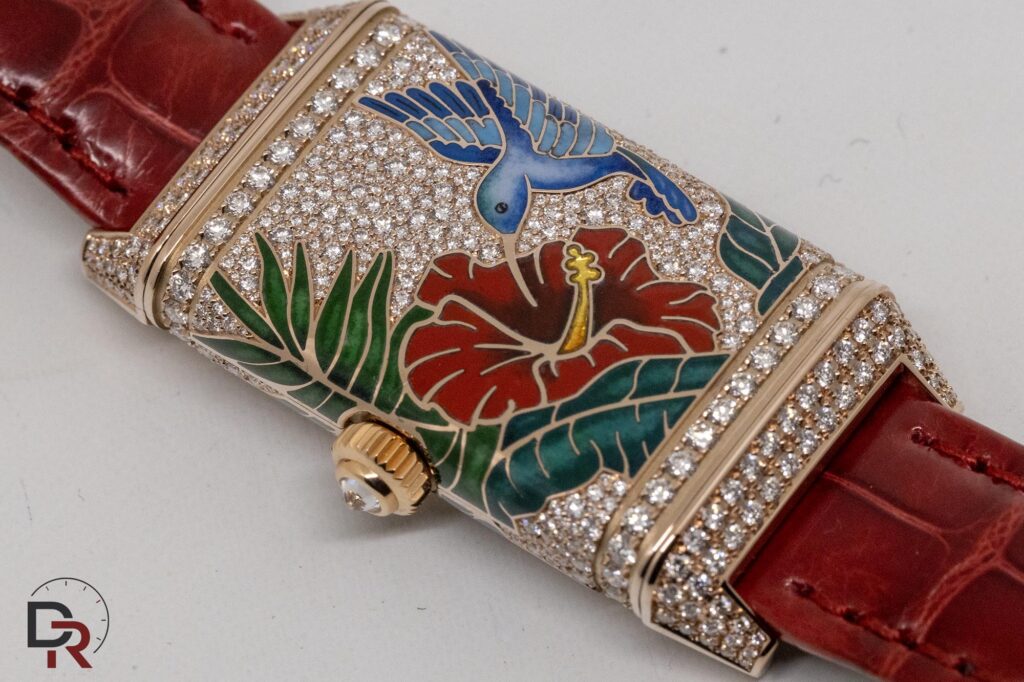
- The Pinnacle of Artistry on a Solid Back (The Reverso): The iconic Reverso elevates the concept of the “solid caseback” to the realm of high jewelry. The reverse side of the swiveling case becomes a spectacular canvas where master artisans deploy diamond pavé settings and miniature grand feu enamel artwork featuring exotic motifs.
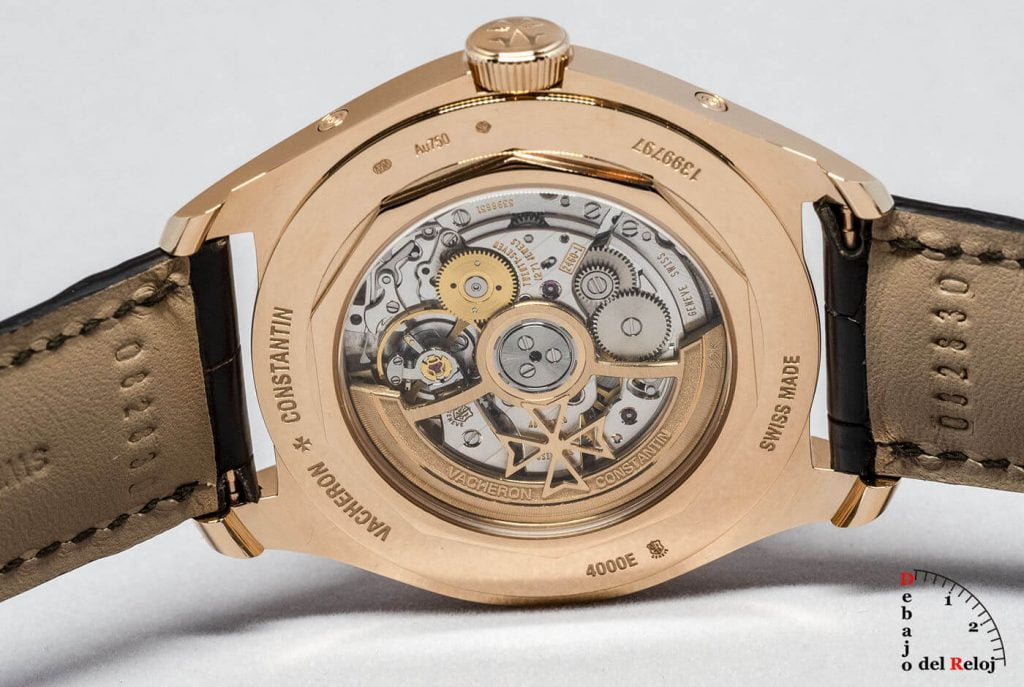
Vacheron Constantin: Supreme Elegance and the Hallmark of Geneva
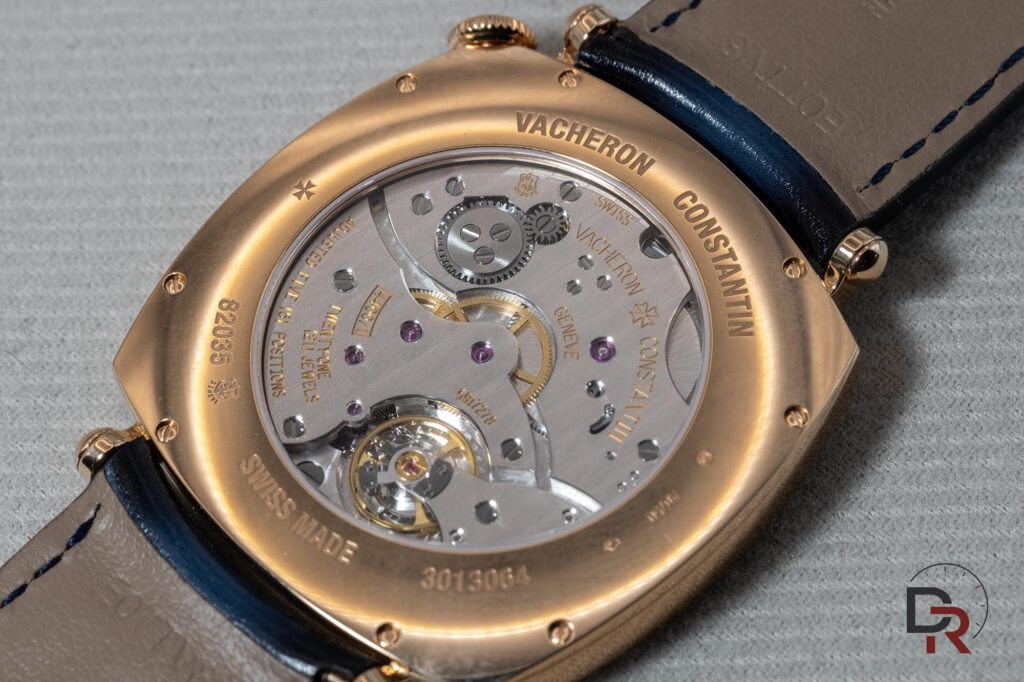
We reach one of the absolute peaks of Swiss haute horlogerie. Vacheron Constantin knows exactly how to endow its casebacks with a classic, aristocratic, and magnetic distinction where exterior sobriety turns around to reveal an uncompromising obsession with technical perfection.
- The Three-Dimensional Purity of Manual Winding: By omitting the oscillating weight, the brand’s manual calibres—such as the magnificent movement from the Historiques line—are showcased completely naked. They provide the perfect canvas to appreciate the exquisite nature of bridges decorated with surgical-grade Côtes de Genève and an exposed balance wheel beating with moving refinement.
- Certified Excellence (Poinçon de Genève): Gaze at the backside of a Vacheron Constantin through a macro lens, and you will find an unmistakable hallmark: the Seal of Geneva. This official engraving on the bridges is the ultimate guarantee that every angle, every wheel tooth, and every mainplate has been hand-polished and hand-beveled according to the strictest traditional standards.
- Rotors as High Jewelry (Automatic): When the maison opts for automatic exhibition casebacks, the oscillating weights are on another level altogether. Frequently skeletonized in the shape of the iconic Maltese Cross and sculpted from solid 22-karat gold, these rotors spin so smoothly they seem to float over the mechanism.
Breguet: The Cradle of the Tourbillon and Marine Poetry
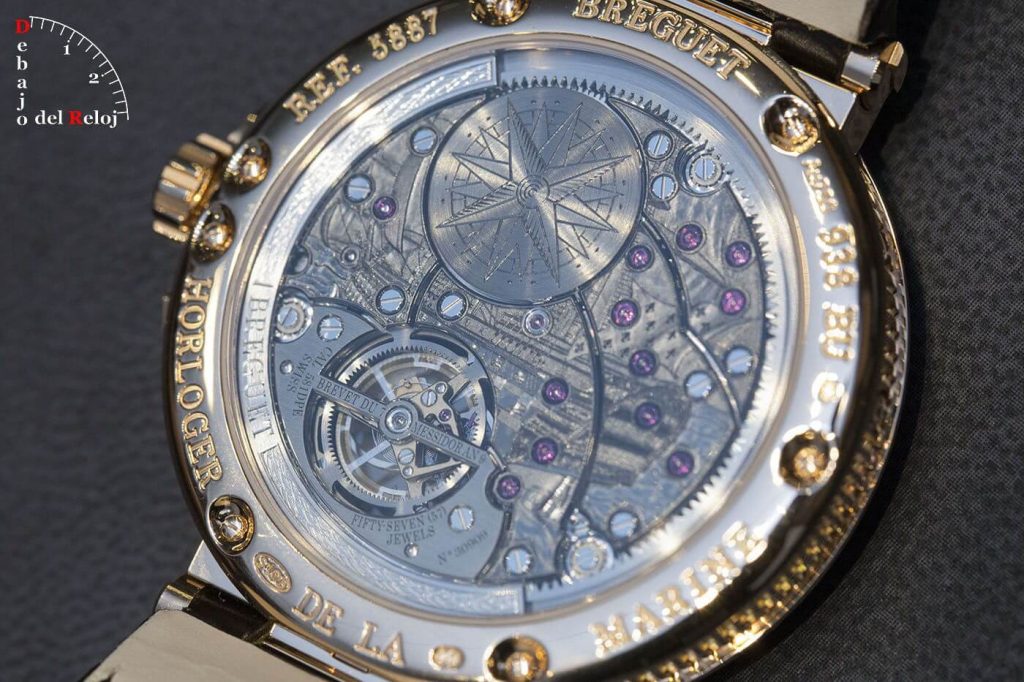
If there is one brand that embodies the aristocracy of hand-finishing, it is Breguet. For this article, the bar is raised to infinity with the caseback of the Tourbillon Équation Marchante 5887—a reverse view that is less of a caseback and more of a museum-worthy masterpiece.
- A Hand-Engraved Map of Naval History: Through the sapphire crystal of this grand complication, the eye gets lost in a highly detailed, freehand engraving that reproduces the silhouette of the French Royal Navy ship, the Louis XIV. This historical nod celebrates Abraham-Louis Breguet’s appointment as Horologist to the French Royal Navy in 1815. The precision of the burin across the bridges creates reliefs that are an absolute feast for macro photography.
- The Peripheral Oscillating Weight: To avoid blocking a single millimeter of this breathtaking engraving, Breguet utilizes an exquisite technical solution: a platinum peripheral rotor that spins around the edge of the movement rather than sitting on top of it. Consequently, it offers the convenience of an automatic watch while preserving the clean, unobstructed view of a manual calibre.
- The Reverse of a Grand Complication: In one corner, the lens captures the bridge of the majestic tourbillon and the intricate wheel train that manages the running equation of time. The edges of the bridges, perfectly angled and mirror-polished, reflect the light in a truly hypnotic fashion.
Chronométrie Ferdinand Berthoud: The Chronometric Obsession
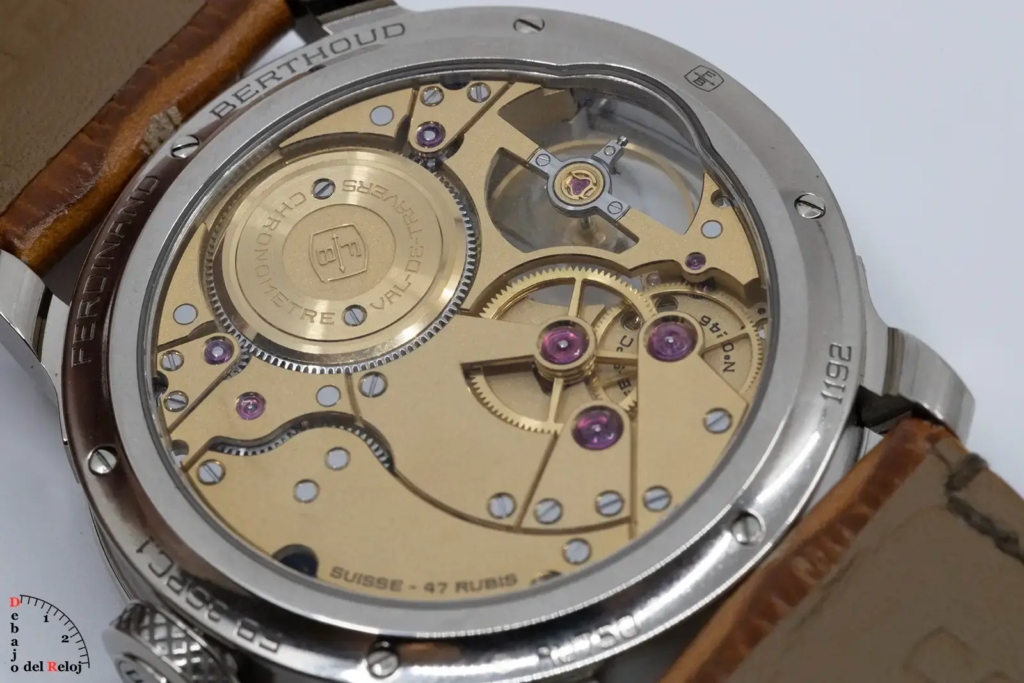
If you are looking for the ultimate caseback to leave technical purists breathless, Ferdinand Berthoud is the Holy Grail. Their movements pay direct tribute to 18th-century marine chronometers. Visually, looking at their reverse side is the closest thing to inspecting the engine of an ocean liner through a microscope.
- Suspended Pillar Architecture: Upon turning over one of their manual calibres, you are met with a movement built on multiple levels using titanium or polished steel pillars. The resulting three-dimensional depth is wild; the mechanism appears suspended, floating in mid-air.
- The Audacity of the Fusee-and-Chain Transmission: The true visual spectacle is witnessing their constant-force mechanism. The macro lens captures a tiny cone (the fusee) connected to a barrel by a razor-thin chain made of hundreds of hand-assembled, polished links. Watching that chain wind and unwind as the watch is wound is pure visual pleasure for any photography lover.
- The Low-Frequency Tourbillon and Specular Polish: Ruling over the center of this mechanical lattice is a giant tourbillon cage beating at a stately 21,600 vibrations per hour. The titanium bridges supporting it feature black polish (or miroir noir)—the most difficult finishing technique in the world, where the metal surface is rendered so perfectly flat that it reflects no light, appearing pitch black or like a flawless mirror depending on the angle.

Bulgari: The Architectural Revolution of the Octo Finissimo
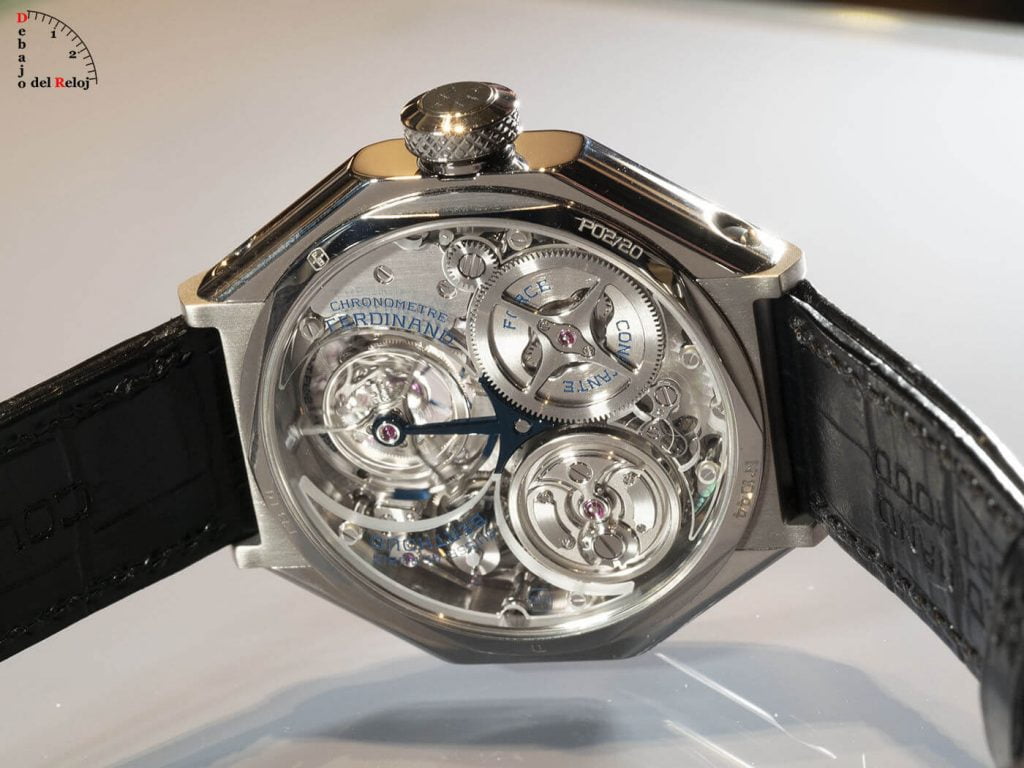
We conclude our selection with the modern architectural revolution of Bulgari. Its Octo Finissimo saga has completely redefined what a cutting-edge movement should look like, revealing a fascinating trilogy of engineering solutions aimed at shaving off millimeters without losing an ounce of visual drama.
The Geometric Nakedness of the Skeleton (Manual): In the manual-wind skeletonized variant, the traditional concept of a caseback vanishes to become a translucent window. The calibre is stripped down to a razor-thin, aggressive web of dark-treated bridges that echo the iconic geometry of the Octo case. Light passes completely through the watch, exposing the mainspring barrel, the gear train, and every tiny wheel in a radical lesson in mechanical minimalism.
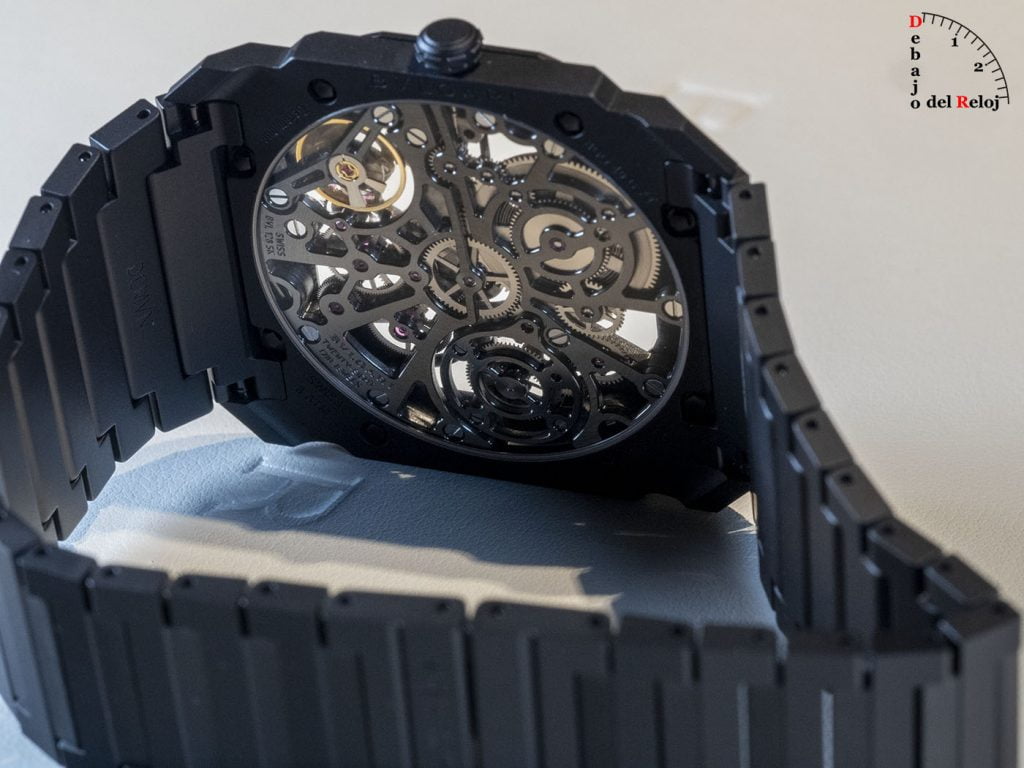
The Purity of the Integrated Micro-Rotor (Classic Automatic): In one of its purest automatic executions, the brand opts to embed a platinum micro-rotor off-center, directly within the same plane as the bridges. The result is a clean, sleek caseback with satin-brushed surfaces decorated with subtle Côtes de Genève, punctuated by the vibrant hue of its rubies.
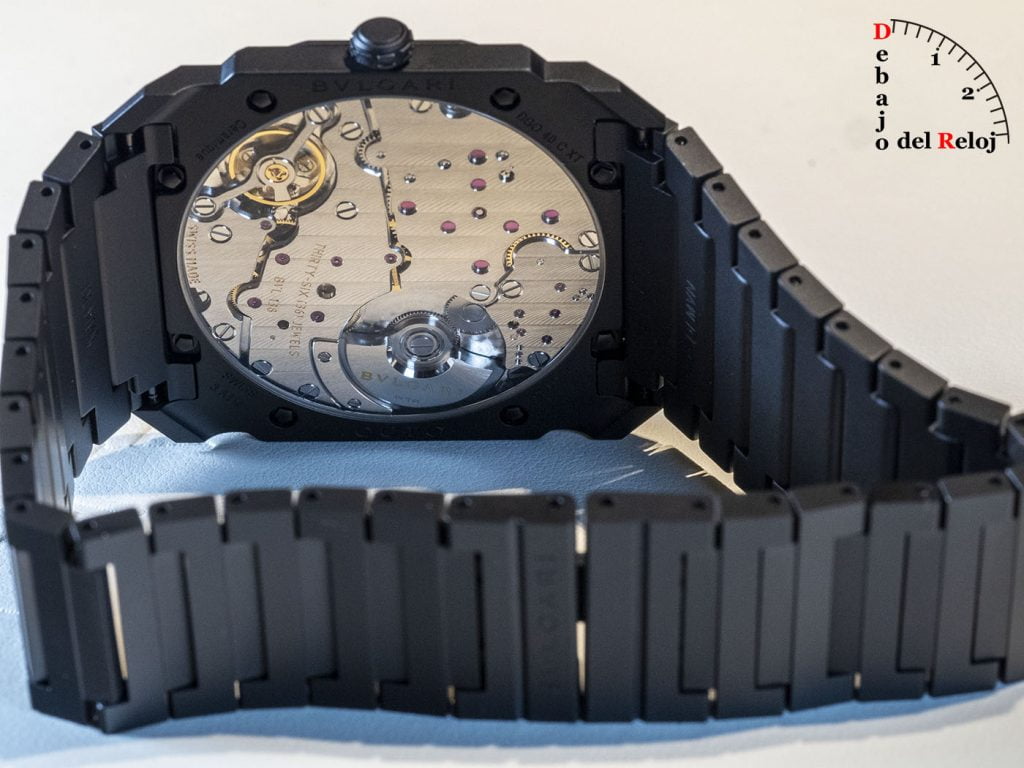
The Magic of the Peripheral Mass (Chronograph): When complexity ramps up—as seen in their celebrated chronograph—Bulgari turns to an invisible stroke of engineering genius: a peripheral rotor crafted from solid platinum (Pt950) that glides around the outer edge of the calibre. Thanks to this, the caseback offers the clean, open view of a manual chronograph, allowing you to photograph the intricate labyrinth of wheels without a central rotor blocking the view.