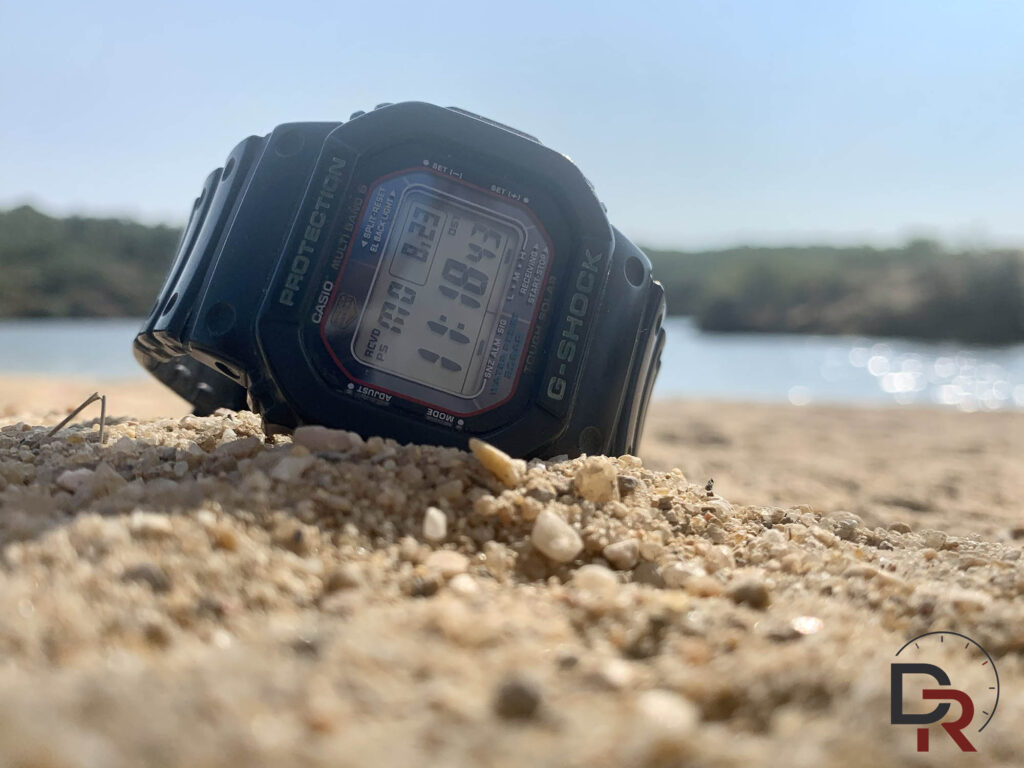
Protecting and preparing our timepieces for summer watch maintenance is essential if we want to enjoy them without any unwanted surprises. Short sleeves let us showcase our favorite pieces on the wrist, while days spent at the beach, pool, or river invite us to test their aquatic capabilities. However, before taking the plunge, it is worth reviewing a few key details regarding case water resistance and strap care.
1. Water Resistance: Don’t Rely on Depth Ratings for Vintage Watches
Just because your watch dial reads 100 m or 200 m does not guarantee it remains water-resistant today if years have passed since its last service. Over time, temperature fluctuations and aging degrade the polymers in the sealing gaskets.
- Prior Pressure Testing: If you own a vintage model or a watch that hasn’t seen water in years, bring it to your watchmaker for a pressure test before taking it for a dip.
- Mind the Crown: It may sound basic, but always ensure the crown is fully screwed down or pushed flush against the case before entering salt or chlorinated water.
- Gasket Maintenance: If you replace gaskets yourself, always use original replacements and never forget the crown gasket. Thoroughly clean the seating surface and apply neutral liquid silicone to the gasket prior to installation to ensure a proper seal and prevent pinching when closing the case back.
2. Leather Straps: Best Kept in the Drawer During Summer
The combination of sweat, heat, and saltwater can ruin high-quality leather straps in a matter of weeks. As sweat dries inside the pores, salt crystals form, making the leather stiff and prone to cracking.
During the summer season, the best approach is to remove leather straps, wipe them clean with a damp cloth, let them dry in the shade, and store them in a cool place until autumn. If you need to clean or condition them, use specialized leather care products; avoid standard Nivea cream or mink oil if you wish to prevent darkening the original shade of the leather.
3. Rubber Straps for Summer Watch Maintenance: Cleaning & Hydration
Rubber is the go-to material for summer thanks to its complete water resistance. However, prolonged direct sunlight, chlorine, and sea salt can dry out the elastomers over time, making them brittle.
To extend the life of your rubber straps, follow this simple routine:
- Rinse After Use: Every time you exit the sea or the pool, rinse the strap under tap water using mild neutral soap. Dry it thoroughly with a microfiber cloth.
- Periodic Hydration: Occasionally apply a few drops of neutral silicone oil, glycerin, or pure petroleum jelly onto the strap. Massage gently and wipe off any excess. This preserves the elasticity of the elastomers and prevents cracking.