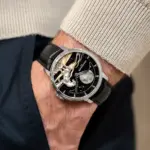
At the end of November 2025, in collaboration with the Saxon manufacture A. Lange & Söhne, we had the exclusive privilege of crossing the private thresholds of the Royal Palace of Madrid to ascend to its upper floors. Far from the opulent rooms of the conventional tourist route lies a silent universe where time does not pass, but is restored: the Clock Restoration Workshop of Patrimonio Nacional.
In this space steeped in the aroma of fine wood, precision oils, and polished metal, the institution’s master clockmaker safeguards, dismantles, and brings back to life some of the most valuable and iconic horological pieces in European history. A journey into the heart of palace micromechanics, where light and photography reveal the essence of high artisan conservation.
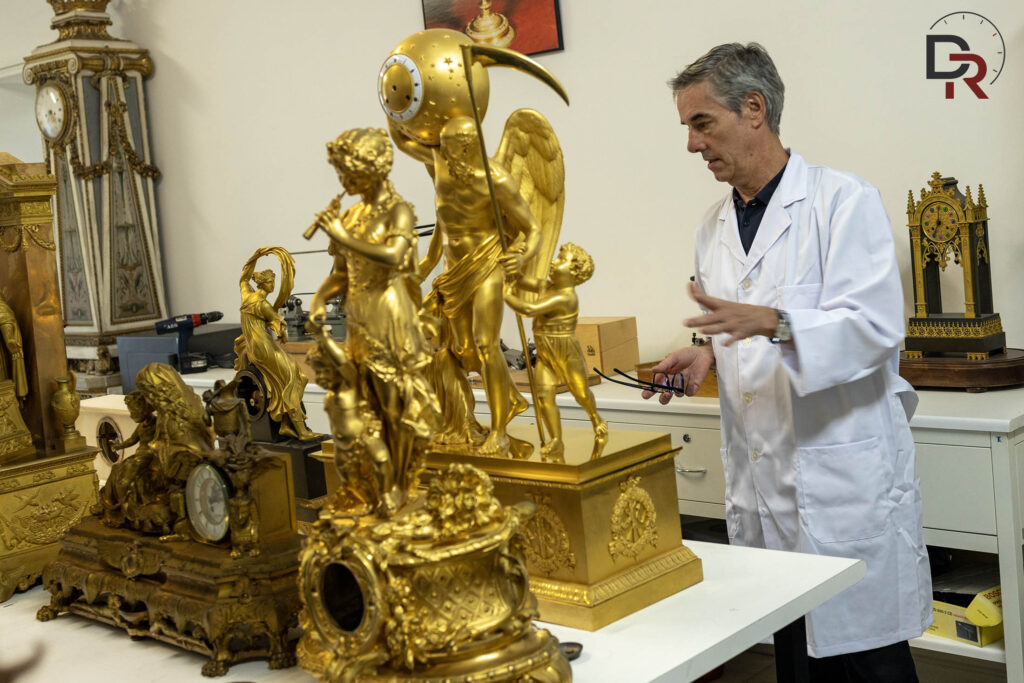
Workbenches: Where Micro-Engineering Meets History
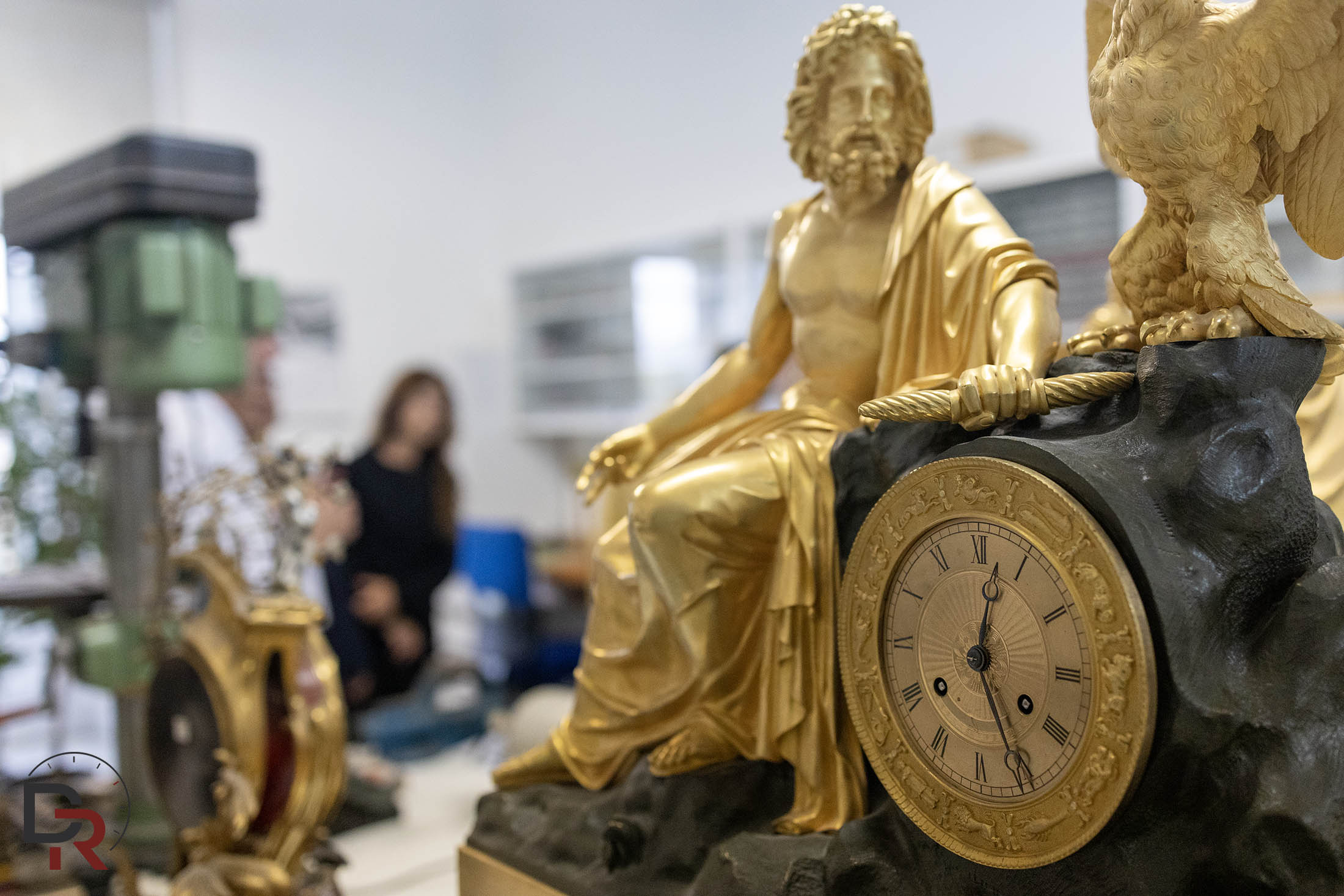
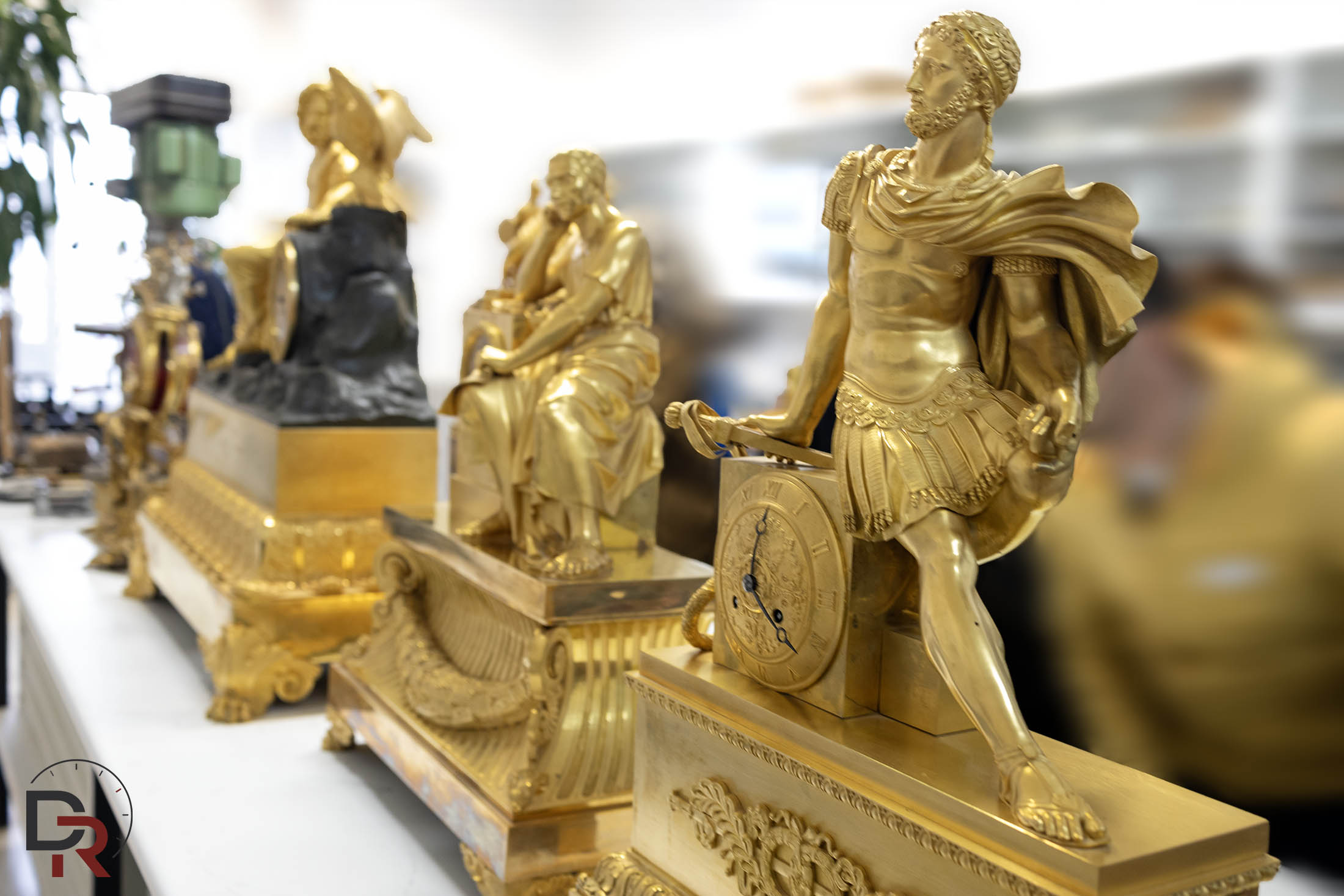
The atmosphere of the workshop radiates an almost liturgical devotion to detail. Across the workbenches rest not mass-produced components, but mechanical sculptures from the 18th and 19th centuries, mantel clocks in mercury-gilded bronze, and chiming mechanisms dating back to the reigns of Philip II, Charles III, and Charles IV.
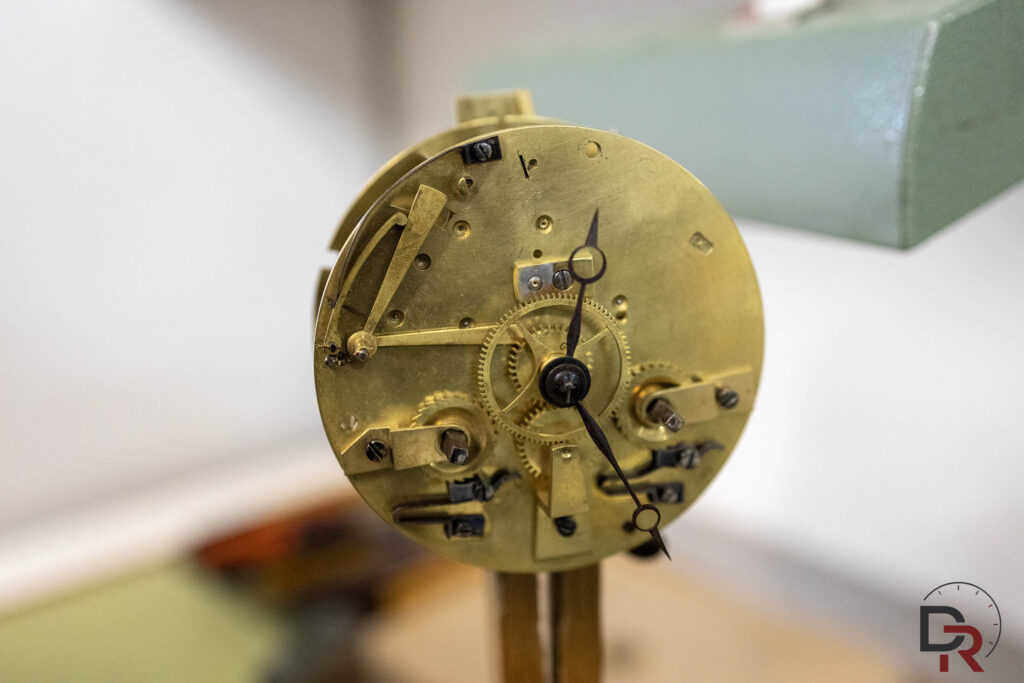
Every piece displayed in the workshop stands as a living testament to Patrimonio Nacional’s level of preservation. As the master clockmaker explained to us, the restoration process requires crafting custom tools by hand, replacing pivots or escape wheels using traditional lathes, and meticulously preserving the original patinas of the bronzes without compromising the work’s historical aesthetic or mechanical precision.
Bare Mechanisms: From Engraved Brass to Chimes
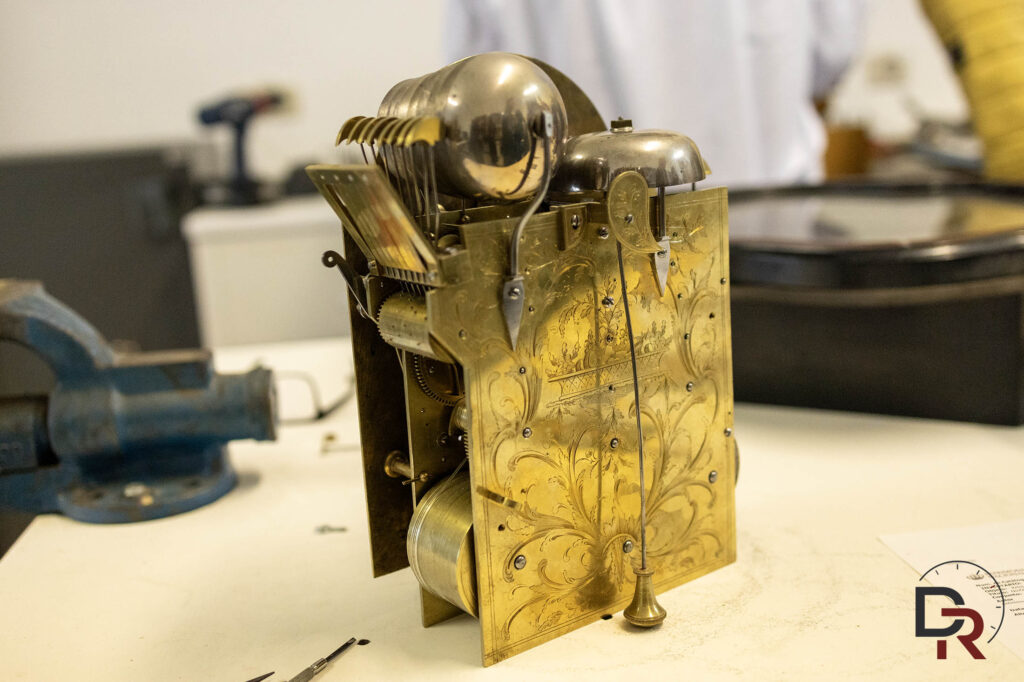
Observing the movements closely on the test benches reveals the extraordinary ornamentation that 17th- and 18th-century watchmakers reserved for the internal components. Hand-engraved floral motifs on polished brass plates, multi-bell chiming systems, and complex astronomical dials demonstrate the supreme craftsmanship of the era.
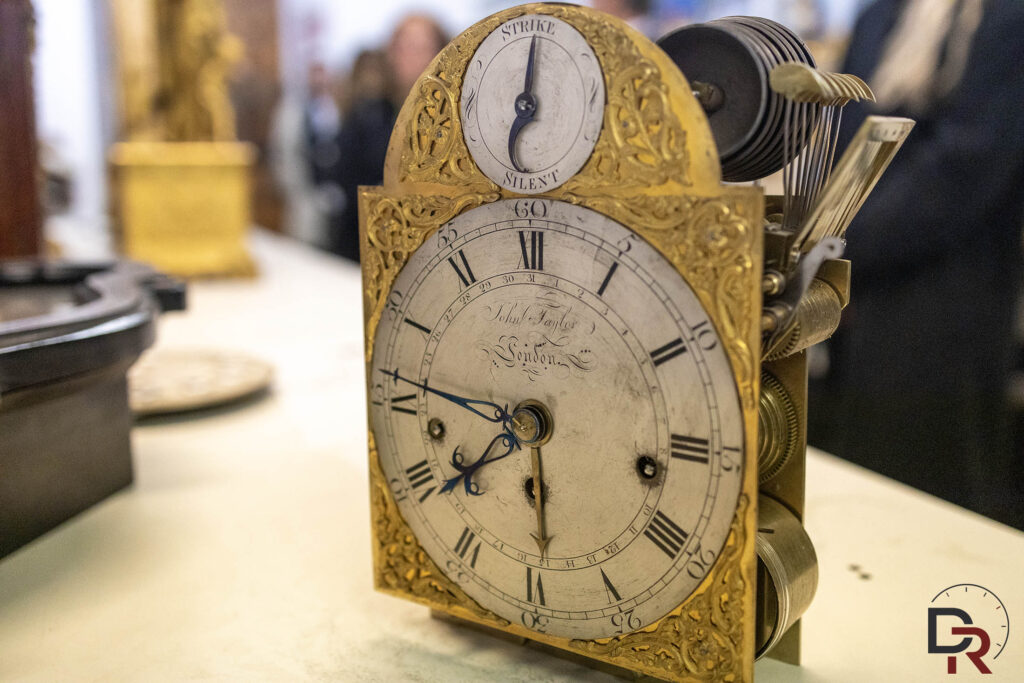
A striking example is the movement signed by legendary London clockmaker John Taylor. Its deeply engraved backplate and upper dial with a «Strike / Silent» selector highlight the fascinating level of technical refinement that reached royal residences during the peak of British and French precision horology.
From Secret Workshops to Grand State Rooms
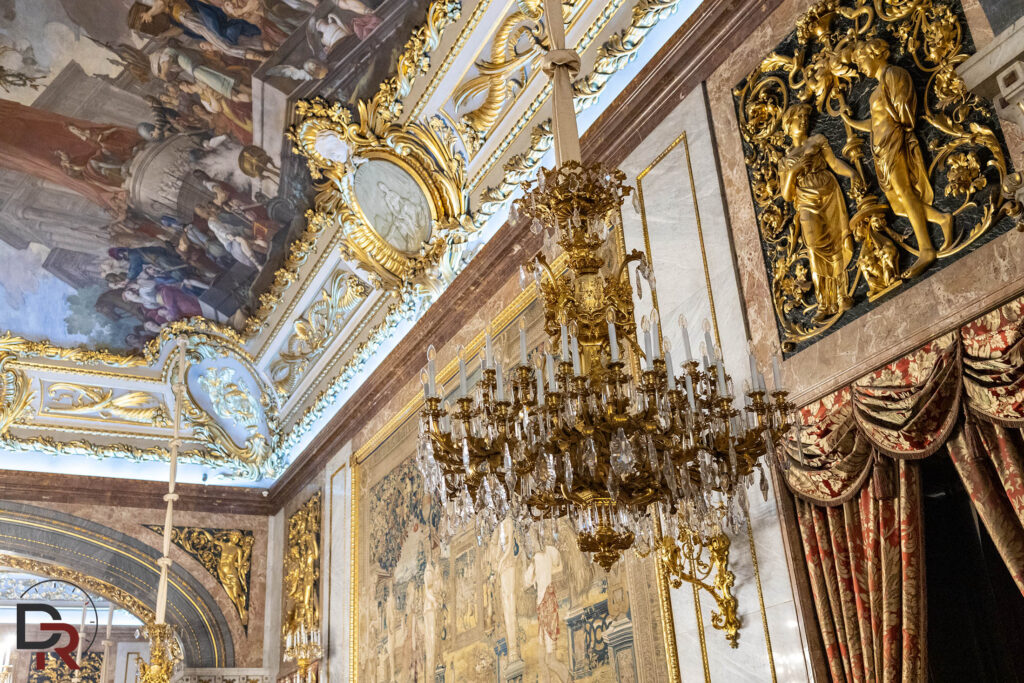
After experiencing the painstaking craftsmanship performed in the privacy of the upper floors, our visit continued down into the majestic state rooms of the official royal residence. It is a setting where each timepiece gains its full contextual meaning, surrounded by monumental frescoes, delicate gilded finishes, and imposing crystal chandeliers.
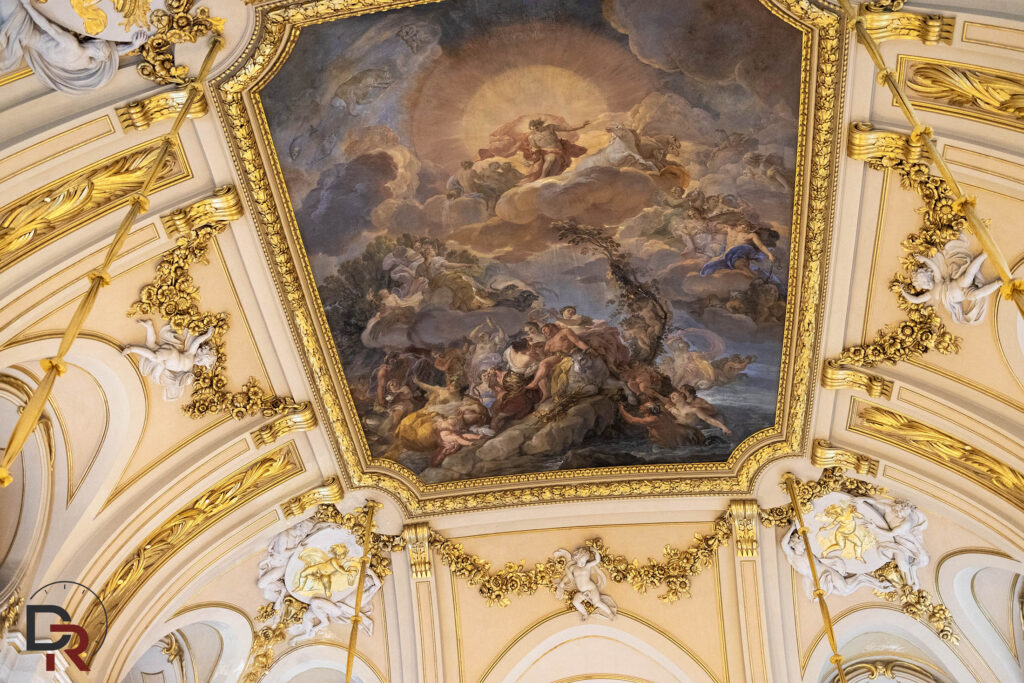
In rooms adorned with velvet wall coverings, monumental mirrors from the Royal Factory of La Granja, and historical porcelains, the restored clocks are far from mere decorative objects: they are living instruments that continue to mark the palace hours with remarkable accuracy.
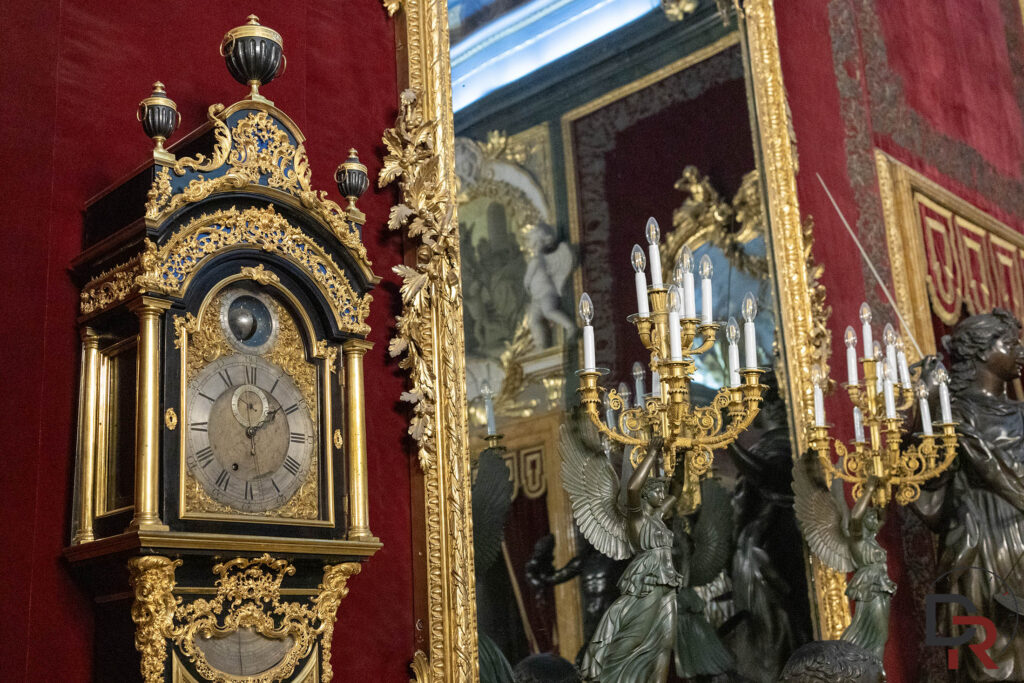
Among the highlighted masterpieces stands the majestic longcase regulator clock by John Ellicott (c. 1745). Acquired by King Ferdinand VI, this nearly three-meter-tall masterpiece housed in ebony and gilt bronze blends regal aesthetics with Enlightenment scientific precision: it features a rotating celestial globe, lunar calendar, equation-of-time hand, and an innovative temperature-compensated pendulum engineered to offset thermal variations.
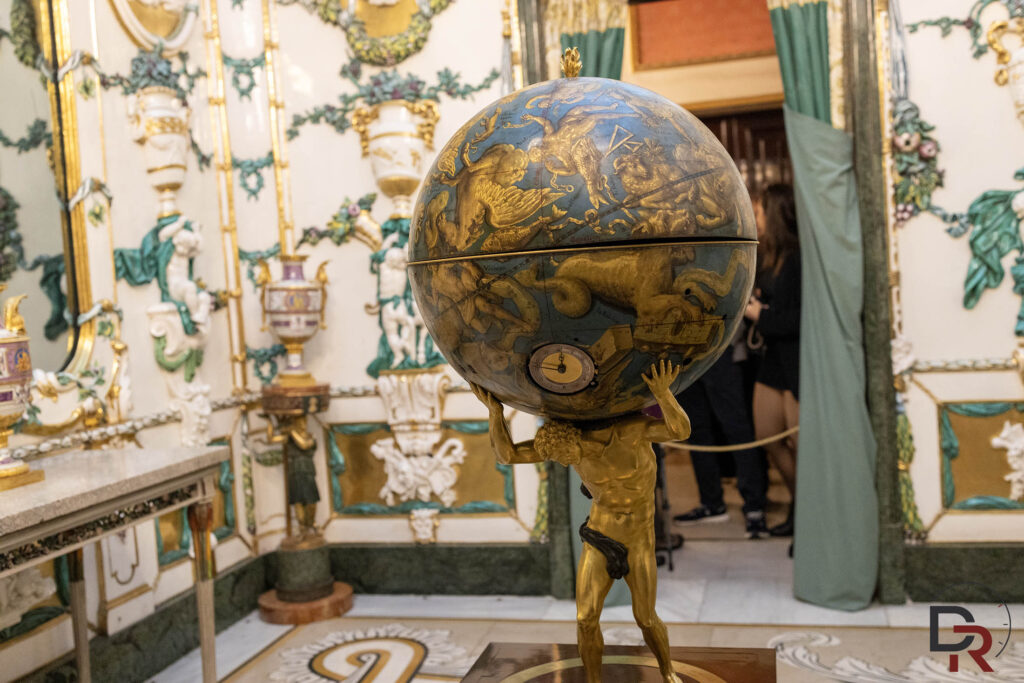
Alongside this British technical achievement rests the unforgettable Atlas mechanical planetarium clock by Abraham-Louis Breguet (c. 1800). Its polychrome celestial globe conceals an intricate gear train designed to replicate the exact orbital movements of the planets known in the early 19th century, representing the ultimate fusion of fine art, astronomy, and micromechanics.
Three Centuries of Royal Passion: From British Precision to French Luxury
The remarkable heterogeneity of the calibers entrusted to these workbenches today is no coincidence: it reflects the personal pursuits of the Bourbon dynasty throughout the 18th century. Following the fire at the old Alcázar and the turmoil of the War of the Spanish Succession, Philip V and Ferdinand VI favored the technical superiority of the British school. Guided by royal clockmakers such as Thomas Hatton, they filled the palace rooms with creations signed by legends of London watchmaking like George Graham, John Ellicott, and John Taylor, alongside captivating mechanical automatons.
With the accession of Charles III, royal patronage took an Enlightenment turn with the establishment of the Royal School-Factory of Clockmaking in Madrid to train local artisans capable of competing with European powers. However, the pinnacle of collecting arrived under Charles IV and Ferdinand VII. Acquiring Parisian horological masterpieces through the famous marchand-mercier François-Louis Godon—including creations by Ferdinand Berthoud and Abraham-Louis Breguet’s planetary clock—they built a heritage of over 700 historical timepieces, widely recognized as one of the finest public collections in the world.
Today, the responsibility of this central workshop at the Royal Palace of Madrid extends far beyond the capital: from here, the horological heritage of all Spanish Royal Sites is supervised, repaired, and kept running, including the Monastery of El Escorial, the Royal Palace of Aranjuez, La Granja de San Ildefonso, and La Almudena.
Notebook: Workshop & Collection
• Institution: Patrimonio Nacional (Spain).
• Collection Size: Over 700 historical timepieces preserved across Spanish Royal Sites.
• Location: Clock Restoration Workshop, Royal Palace of Madrid (Private / restricted access).
• Scope: Maintenance and conservation of the horological collection across the Royal Palace of Madrid, El Escorial, Aranjuez, La Granja de San Ildefonso, and Spanish Royal Sites.
• Historical Period: Mechanical timepieces ranging from the 16th to the 19th century.
• Featured Master Clockmakers: John Ellicott, Abraham-Louis Breguet, John Taylor, Thomas Hatton, George Graham, François-Louis Godon, and Ferdinand Berthoud, among others.
* Special Thanks: Coverage conducted under the private invitation of fine watchmaker A. Lange & Söhne.