
The art of enamel firing (or Grand Feu) stands as one of the most complex, fascinating, and demanding disciplines in haute horology. While its origins as a decorative technique on metal trace back over 3,000 years to Mycenaean antiquity and Ancient Egypt, its integration into watch dials and cases took place between 1630 and 1680 in France and Switzerland, pioneered by masters such as Paul Viet and the Huaud family.
Unlike conventional painted or lacquered finishes, an enameled surface never loses its luster, does not degrade under UV light, and can preserve its chromatic intensity intact for centuries. However, its manufacturing process demands extreme artisan skill, with scrap rates routinely reaching between 50% and 70% due to fractures, air bubbles, or color shifts inside the kiln.
History and Fundamentals of Grand Feu Enameling
The historical need for durable, legible, and corrosion-resistant surfaces drove 17th-century watchmakers to adapt the fusion of vitrified silica powder onto metal discs. Cities such as Blois (France) and Geneva (Switzerland) became the epicenter of this craft, evolving from the decoration of pocket watch covers to full-dial compositions featuring meticulous miniature painting.
The artisanal process requires between 8 and 15 hours of net labor spread over several days. The fundamental procedure involves applying powdered vitrifiable silica combined with metallic oxides (which supply the color) onto a base of gold, silver, or copper. Following application, the piece undergoes multiple successive firings at temperatures ranging between 700 °C and 900 °C (1,290 °F to 1,650 °F).
🏛️ Historical Insight: The Secret Behind Pocket Watch Cases
During the 17th and 18th centuries, decorating pocket watch covers with enamel presented a fundamental technical dilemma: how could enamel be fired at over 800 °C without warping the case, annealing the hinges, or melting gold and silver solders?
The answer lay in modular construction using independent medallions. Master artisans did not fire the fully assembled case; instead, they enameled a separate copper or gold disc onto which the miniature was painted. Once fired and cooled, the goldsmith mounted the medallion into the outer cover using metal bezels, tabs, or mechanical press-fits.
A note from the era: Genevan painters like the renowned Huaud family (c. 1680–1730) sold these loose medallions across Europe. It was common practice to purchase an enameled miniature in Switzerland and subsequently travel to London or Paris to commission a custom case and movement.
Key Stages in Dial Manufacturing
- Base Preparation (1 to 2 hours): Cutting, stress-relieving, and chemical cleaning of the metal blank.
- Pigment Application (1 hour): Dry sifting or wet packing using a fine sable brush.
- Successive Firing Cycles (2 to 4 hours): Multiple passes through the kiln lasting between 50 and 90 seconds each.
- Controlled Cooling (3 to 5 hours): Mandatory resting period after each firing cycle to prevent thermal shock from cracking the glass.
- Details and Indices (2 to 3 hours): Hand-painting minute tracks and numerals, followed by a fixing fire and final polishing with a diamond lap.
Benchmark Manufacture Houses Preserving Enamel Arts
Today, very few manufactures retain the in-house capability to produce enameled dials, relying instead on internal ateliers or collaborations with renowned specialized workshops like Donzé Cadrans:
Patek Philippe and Vacheron Constantin
Industry benchmarks in the artisanal execution of Cloisonné (delineated by delicate gold wire) and miniature painting techniques to transform watch dials into fine art canvases.
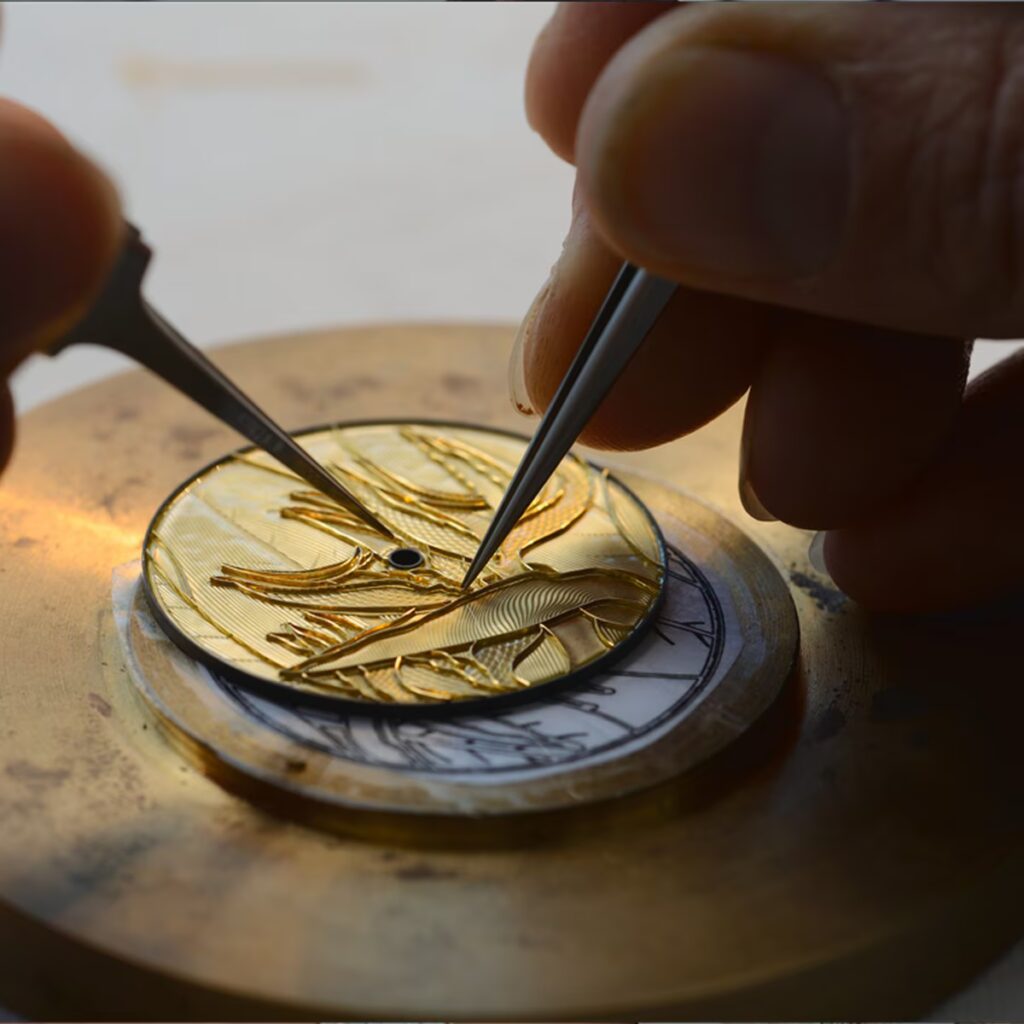
A. Lange & Söhne
Masters of black and white enamel execution in high-complication timepieces (such as the Handwerkskunst series), where the ultimate challenge is achieving a perfectly flat, pit-free surface.
Breguet
Guardians of white Grand Feu enamel traditions featuring dense vitreous depth, complemented by signature calligraphy and fire-drawn secret signatures.
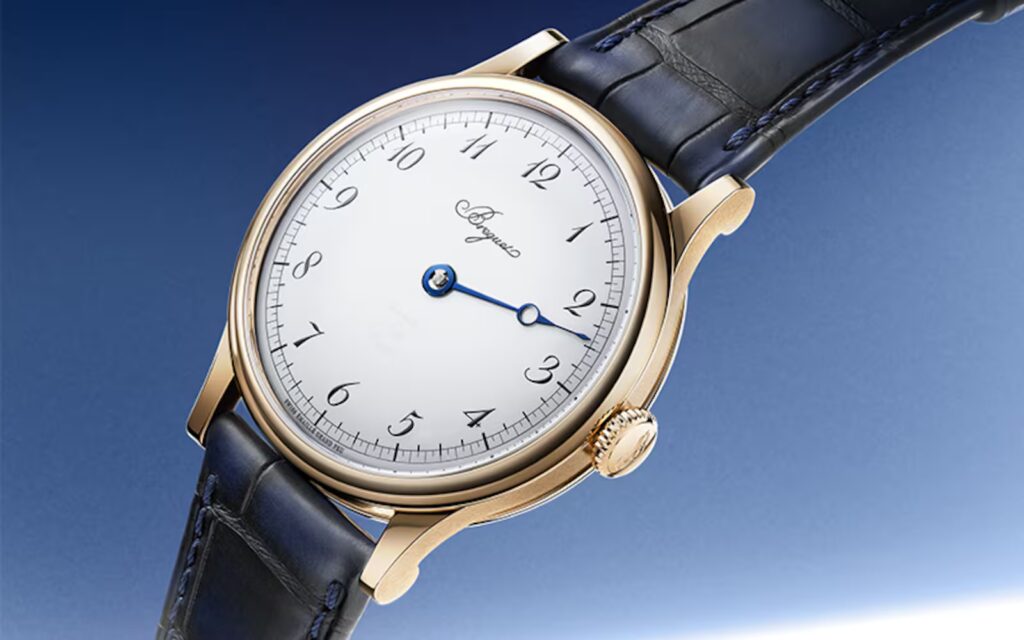
Seiko (Presage Enamel)
One of the few manufactures to successfully democratize traditional fired enamel, produced under the guidance of master craftsman Mitsuru Yokosawa.

🔍 Cult Insight: Donzé Cadrans and the Guardian of the Craft
In the realm of Grand Feu and Cloisonné dials, one name is revered behind the scenes: Donzé Cadrans. Founded in Le Locle in 1972 by master artisan Francis Donzé, this independent workshop was for decades the best-kept secret of houses like Patek Philippe, Cartier, and Breguet for their most complex creations. In 2011, Ulysse Nardin acquired the workshop to ensure the survival of this endangered art form, maintaining artisanal dial production for both its own collections and other prestigious high-watchmaking manufactures.
Artisanal Process at A. Lange & Söhne: The ‘Handwerkskunst’ Case Study
To understand the uncompromising standards required in Saxon high watchmaking, we examine the process executed by A. Lange & Söhne in crafting the enameled dial for the iconic Lange 1 Tourbillon Handwerkskunst, combining relief engraving (Champlevé) and Grand Feu vitrification.
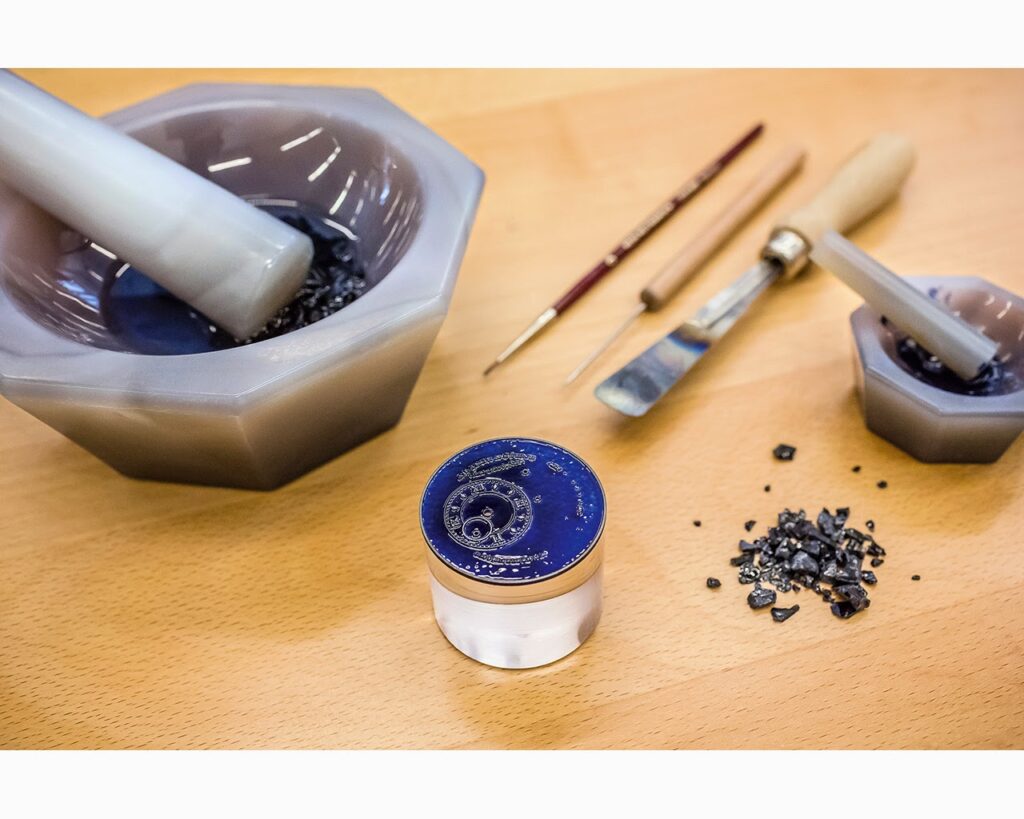
1. Grinding and Purifying the Enamel
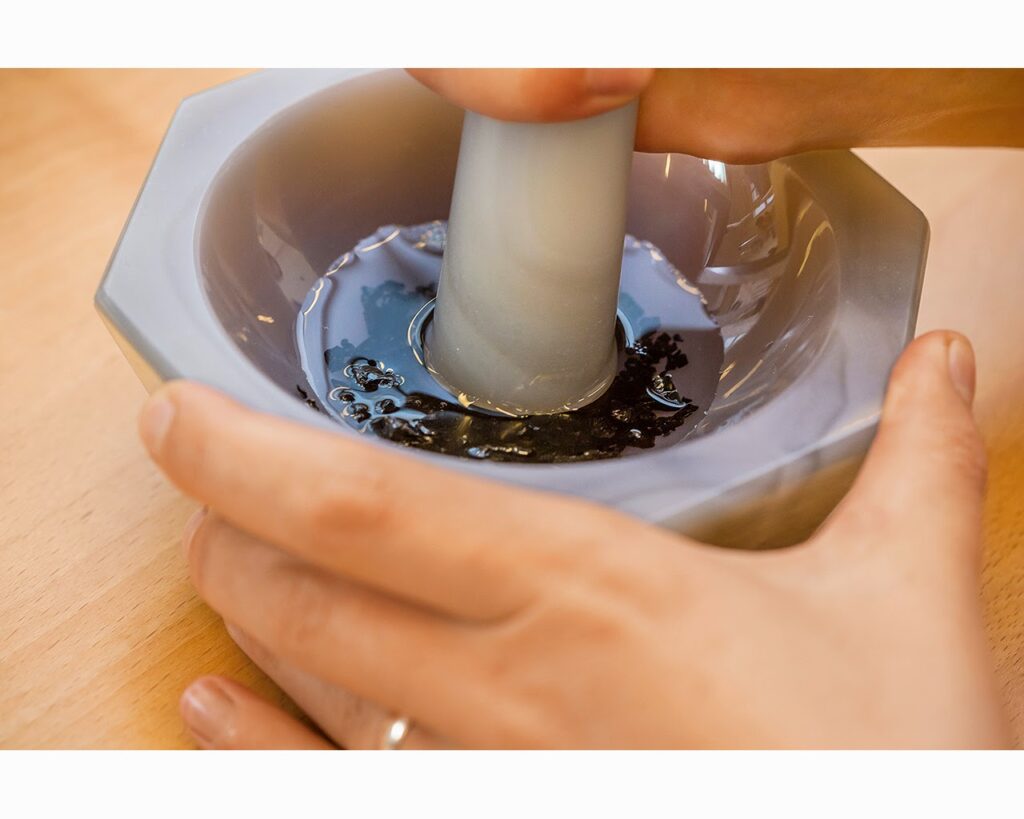
The raw material—specialized glass crystals enriched with metal oxides to achieve color depth—is hand-ground using a pure agate mortar. Agate is selected because its hardness prevents micro-particles from flaking off and contaminating the pigment. The resulting powder is washed repeatedly with purified water to remove floating impurities prior to application.
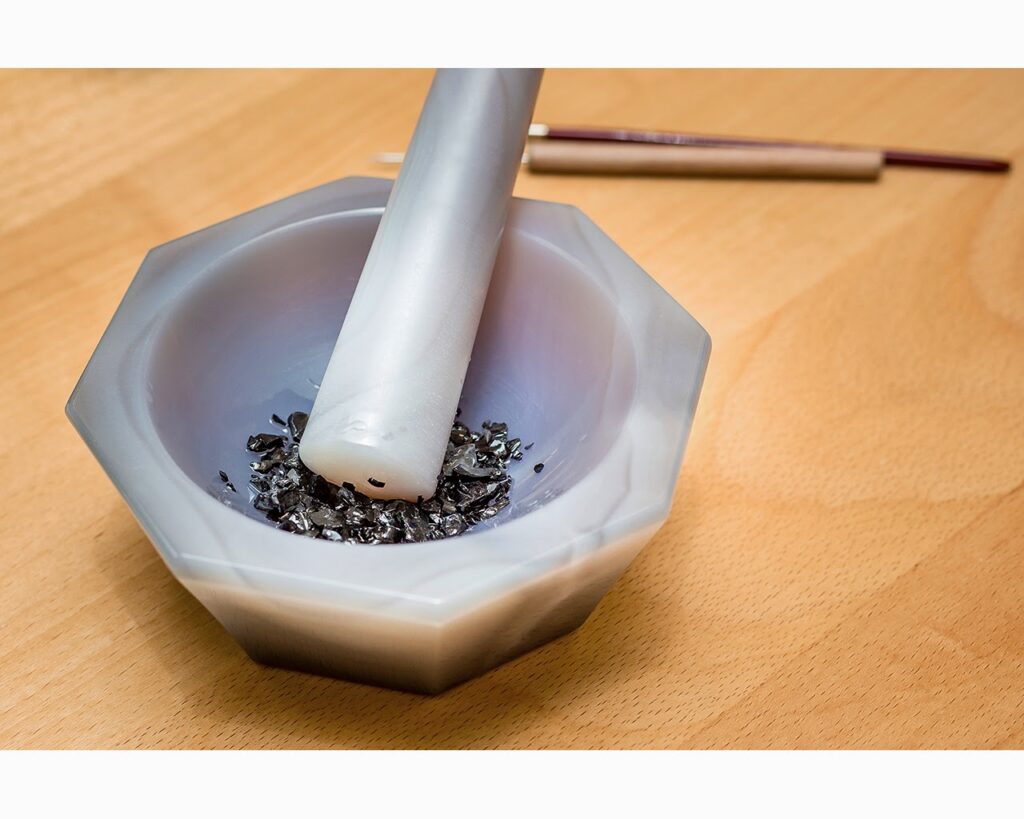
2. Base Preparation and Metal Recessing (Champlevé)
In Champlevé dials, the master engraver hand-carves channels into the metal disc using gravers. Cavities are recessed to receive the enamel, leaving Roman numerals, indices, the outsize date frame, and brand typography standing in raised relief. Additionally, the aperture designed to house the tourbillon cage is cut in advance.
3. Counter-Enameling (Contre-émail)
To prevent the thin metal disc from warping under intense thermal stress during high-temperature fusions, an equivalent layer of enamel powder is applied to the reverse side. This counter-balance layer is essential for maintaining structural flatness at temperatures exceeding 800 °C.
4. Fine Wet-Packing with Sable Brush
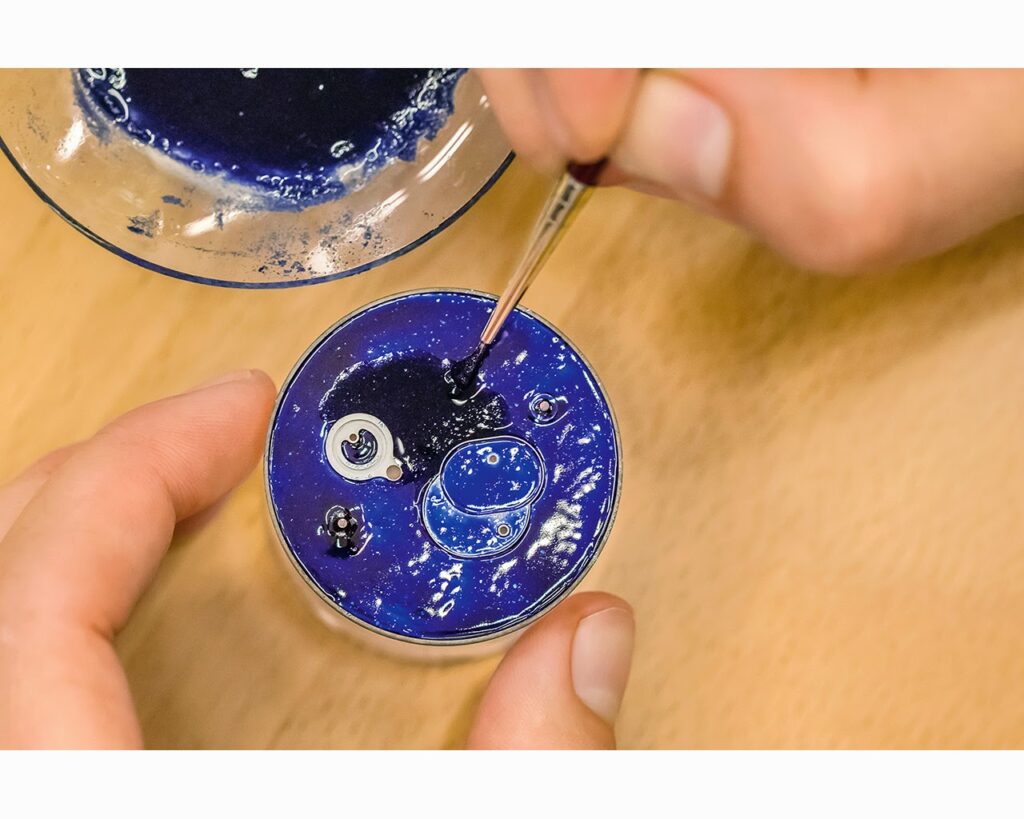
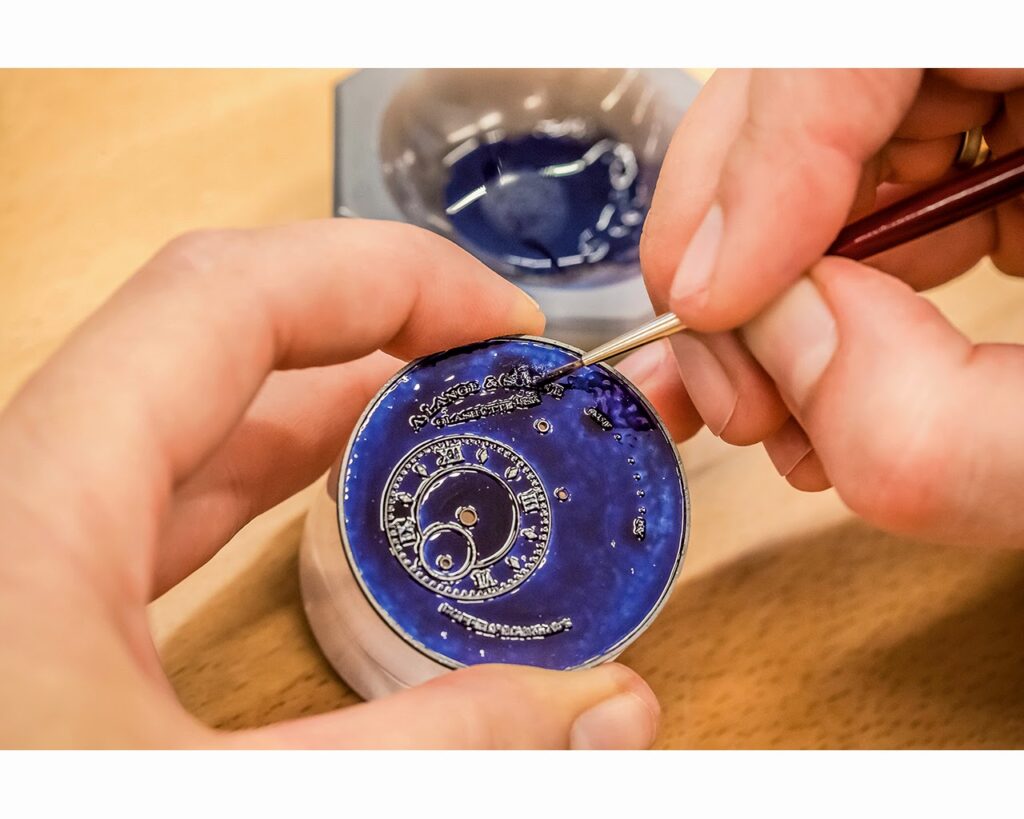
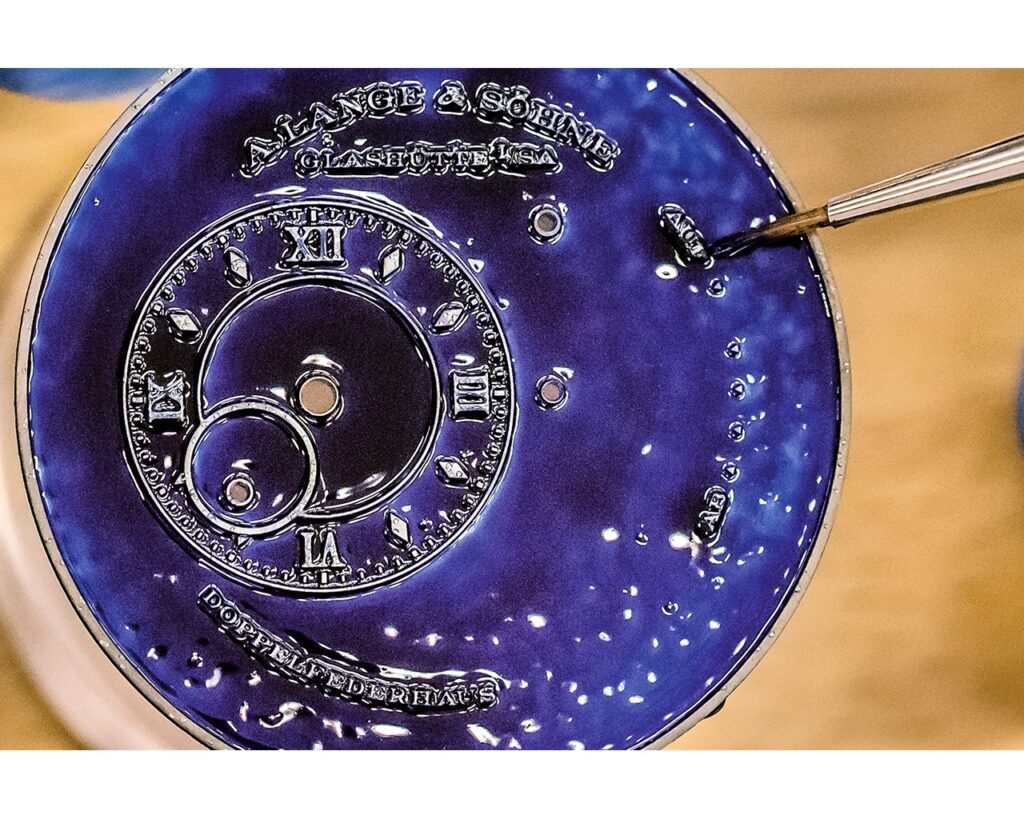
By mixing the fine glass powder with water or essential oils, the artisan applies the moist paste using a fine-tipped sable hair brush. The tiny recessed cells, the edges of the outsize date aperture, and the perimeter of the power reserve indicator (AUF/AB) are meticulously filled.
5. Dry Sifting and Repeated Grand Feu Firing
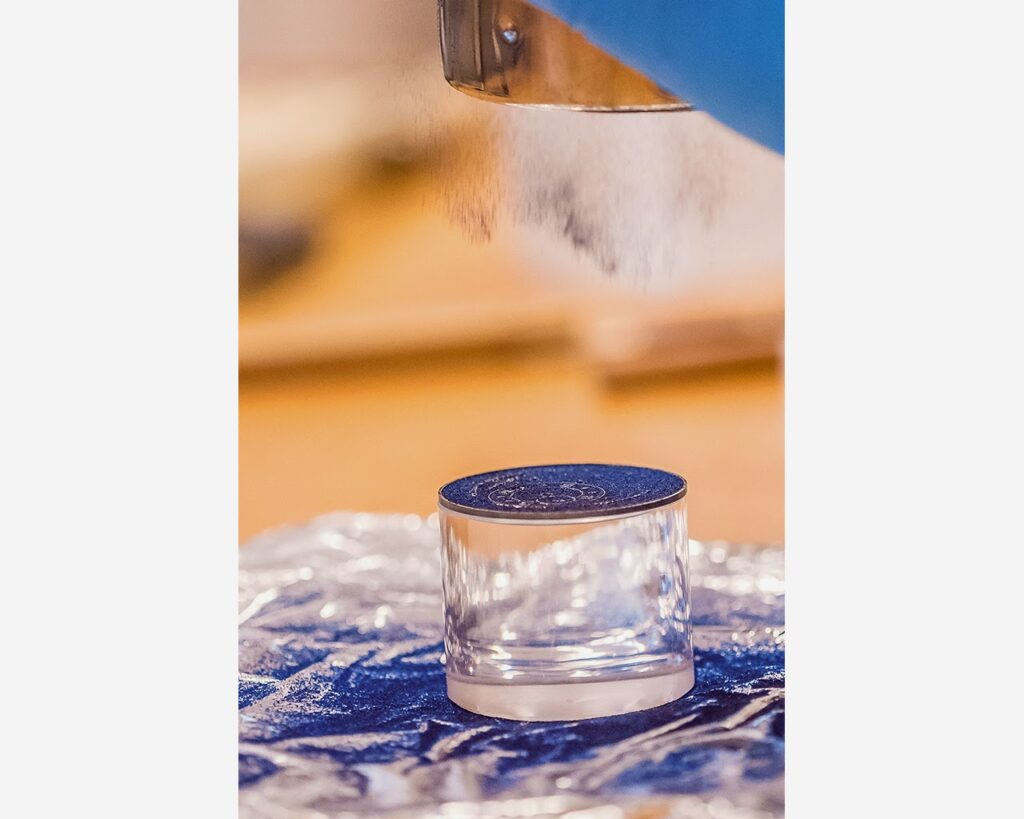
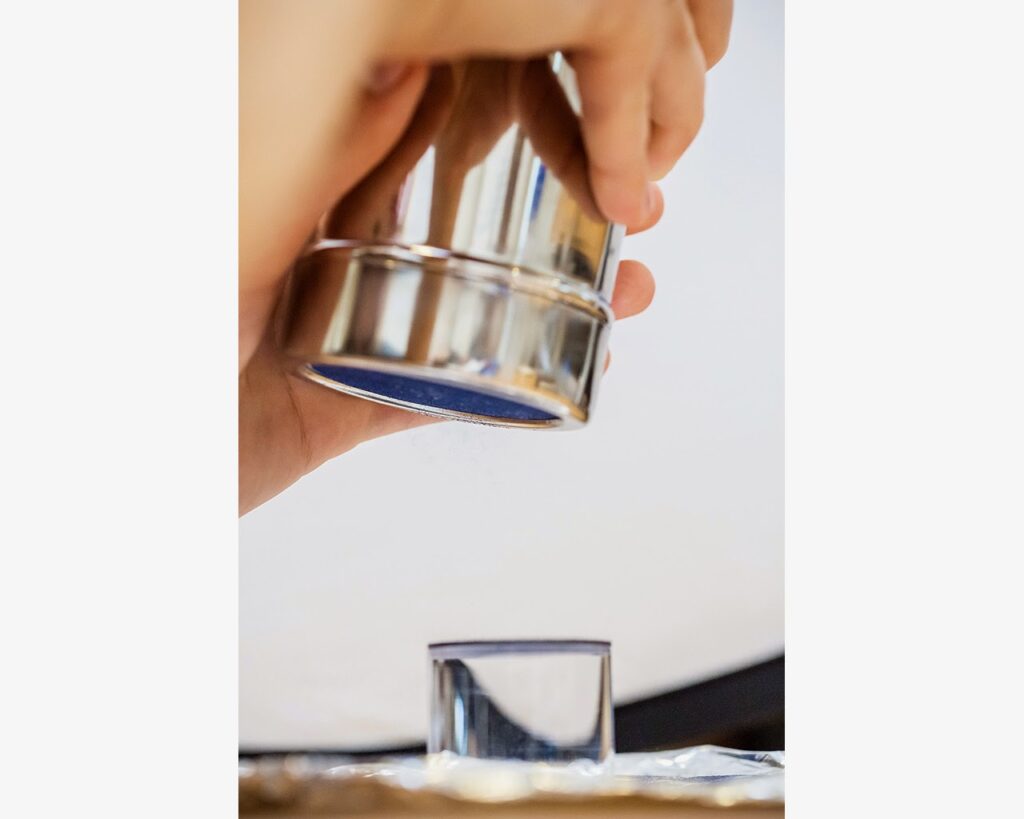
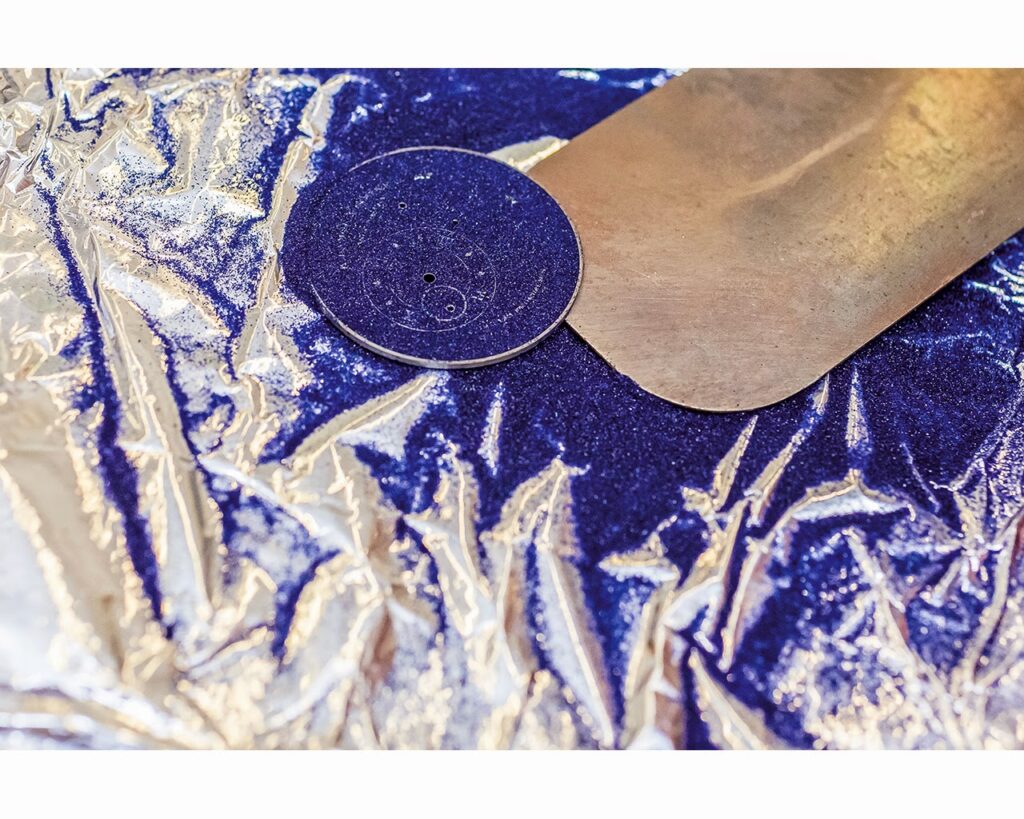
To achieve a uniform, level ground, fine dry enamel powder is sifted over the dial surface. The piece is then inserted into the kiln at temperatures between 800 °C and 840 °C for a matter of seconds. This combined sifting and firing sequence is repeated 4 to 8 times to build up the required enamel depth.
6. Progressive Cooling and Inspection
Following each burn, the dial must cool gradually on a heat-resistant surface to prevent cracking from thermal shock. Once cold, the vitrified mass is inspected under a loupe with raking light to check for micro-pores, air bubbles, or airborne particles before proceeding.
7. Lapping and Leveling (Lapidage)
Multiple fusion passes leave the enamel uneven and elevated above the engraved metal relief. Using water-moistened diamond abrasive stones, the enameler manually laps the surface (lapidage) to grind away excess glass until the enamel sits perfectly flush with the raised gold or silver elements.
8. Final Glaze Firing (Glaçage)
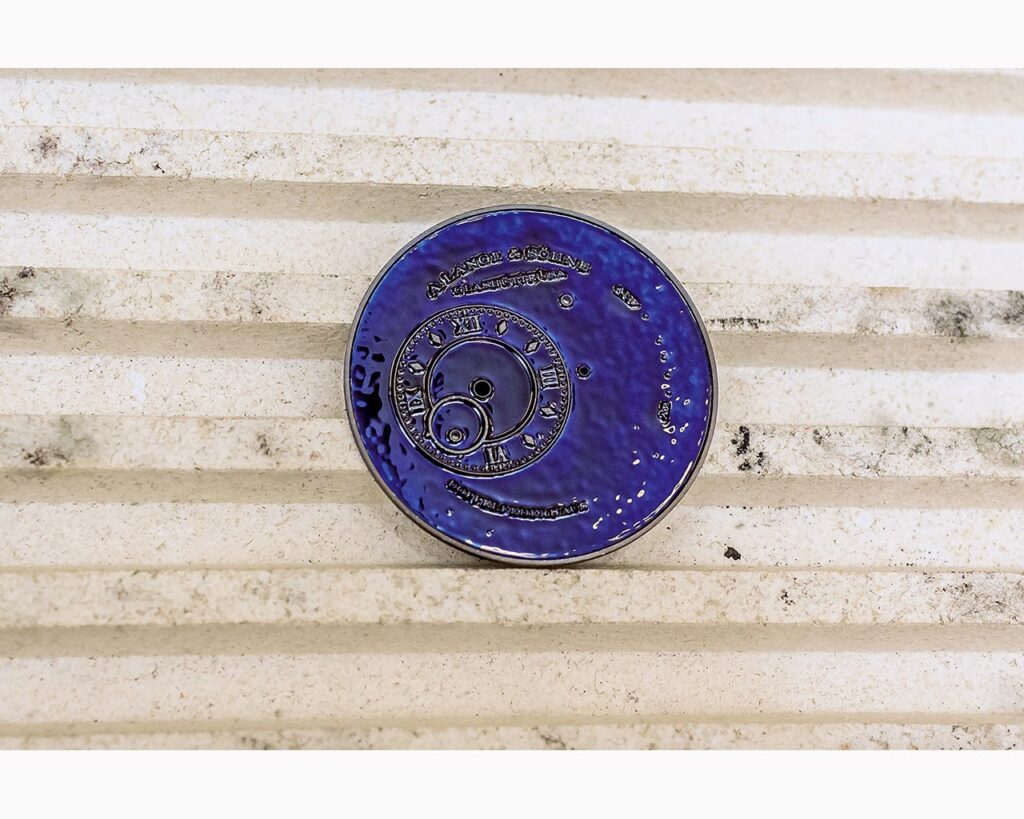
Lapping leaves the surface matte and covered in micro-scratches. To restore the translucent gloss characteristic of Grand Feu enamel, the dial undergoes a final flash-firing in the kiln (glaçage). Extreme heat remelts the micro-outer layer of glass, sealing the surface and restoring a mirror-like shine.
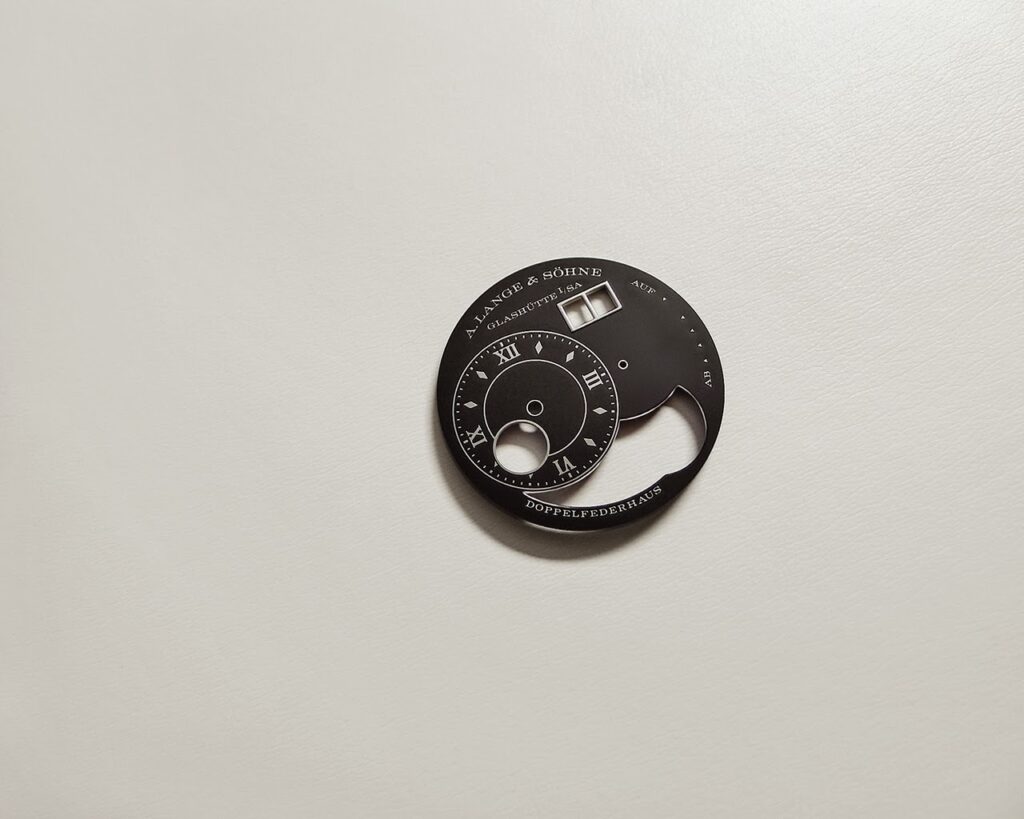
9. Aperture Finishing and Hand Beveling (Anglage)
The final stage involves refining the edges of functional openings. The tourbillon aperture is carefully dressed with precision diamond files to clean the enamel perimeter. The inner metal edges are hand-beveled (anglage) and mirror-polished, delivering the striking optical contrast that defines the Lange 1 Tourbillon Handwerkskunst.
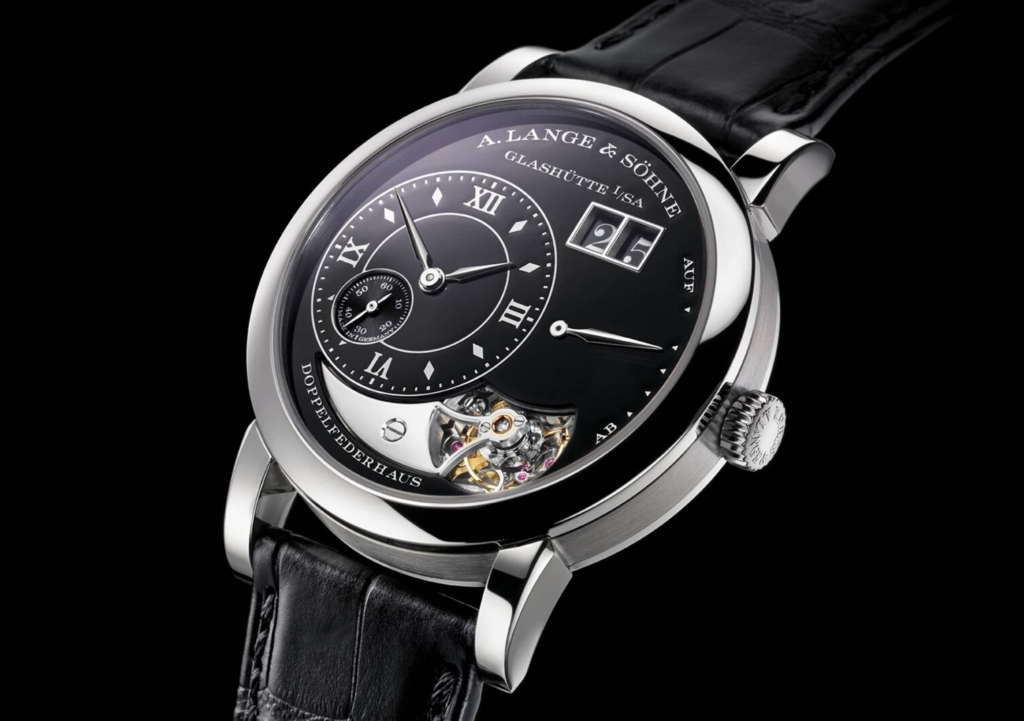
In conclusion: The art of high-fire enameling represents the ultimate convergence of materials chemistry, thermal control, and artisan patience. In an era dominated by automated manufacturing, a Grand Feu dial is not merely a decorative surface; it stands as a testament to the enduring power of hand craftsmanship over time.
Every dial discarded in the kiln and every hour dedicated to precision lapping ensure these pieces retain their unyielding luster for centuries, preserving the true intrinsic value of haute horlogerie.
How do you view Grand Feu dials compared to other traditional finishes like hand-guilloché? Does their technical difficulty justify their place in modern collecting? Leave your thoughts in the comments below.
📸 Special Feature
The Ultimate Guide to Watch Photography: Light, Macros, and Textures
If you enjoy capturing the fine details of artisanal dials through the lens, explore our lighting and composition techniques tailored for fine watchmaking.